


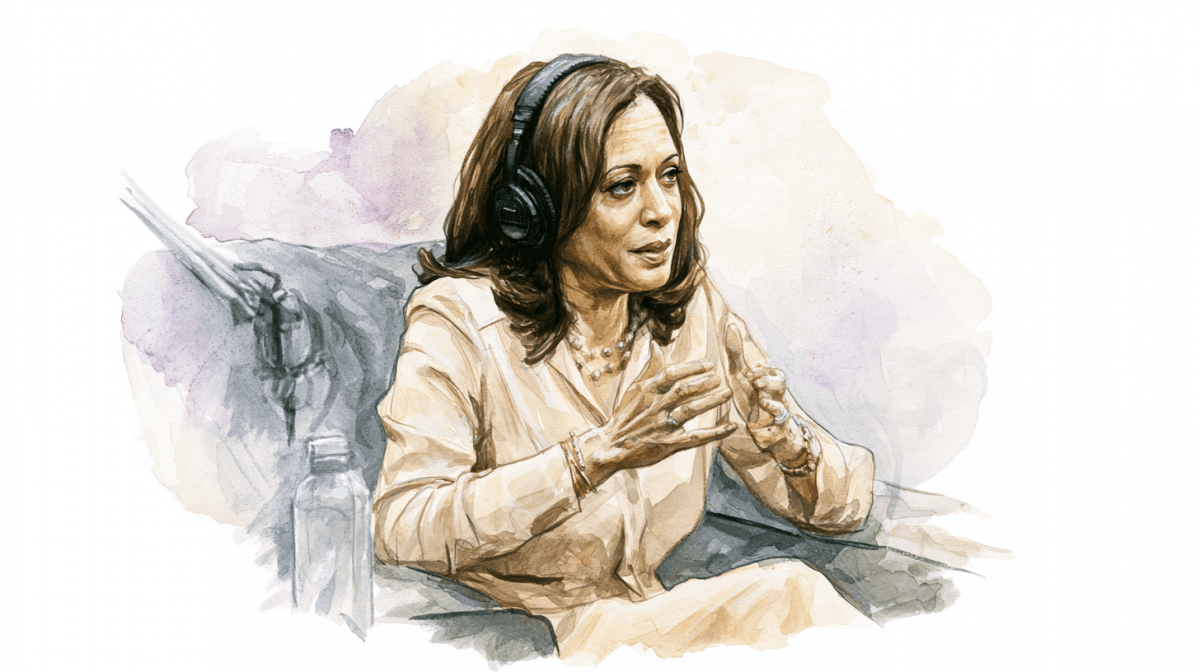
During a livestream discussion hosted by the "Win with Black Women" podcast on Wednesday, Kamala Harris outlined a series of substantial political and institutional reforms, suggesting an "expanded playbook" for the Democratic Party following their 2024 election losses. Harris emphasized a brainstorming approach, stating, "I think that we need an expanded playbook in a way that we invite all ideas. This is a moment where there are no bad ideas, a no bad idea brainstorm is what I’d like to call it."
"You don't just blow up the system when you lose." — Speaker Johnson, Republican Speaker of the House.
Among the prominent ideas Harris floated were the expansion of the Supreme Court of the United States, a reconsideration of the Electoral College system, granting statehood to Washington, D.C., and Puerto Rico, and exploring the implementation of multi-member congressional districts. She specifically referenced "Supreme Court reform, which includes expanding the Supreme Court," reviving a proposal that garnered significant debate during the administration of President Joe Biden. Additionally, Harris suggested that Senate Democrats should consider imposing stronger penalties for Supreme Court nominees or justices found to have misled lawmakers during their confirmation hearings.
These comments quickly ignited a wave of backlash from conservative figures and Republican officials. Critics accused Harris of advocating for structural changes designed primarily to benefit Democrats politically in the wake of recent electoral setbacks. Utah Senator Mike Lee (R) responded online to Harris's remarks, dryly commenting, "Well, maybe a few bad ideas." Speaker Johnson also weighed in, labeling Democrats "institutional arsonists" following Harris's suggestions for court expansion and electoral reform.
Conservative commentators echoed these criticisms, particularly regarding the proposed changes to the Electoral College. They highlighted that Harris's suggestions came after Democrats lost both the Electoral College and the national popular vote in the 2024 presidential election, drawing attention to the party's broader electoral challenges. Ian Miller, a conservative commentator, specifically noted that Harris's proposals emerged despite the national popular vote outcome, underscoring the perceived disconnect between the Democratic Party's electoral performance and its proposed institutional overhauls.
The discussion surrounding these reforms comes at a time of heightened national debate concerning the judiciary, election laws, congressional representation, and the fundamental structure of federal institutions. Recent Supreme Court decisions and ongoing redistricting disputes have fueled these conversations, creating a fertile ground for proposals that seek to alter the existing political landscape.
Proponents of Supreme Court expansion argue that the court has become politically imbalanced, a consequence of years marked by contentious confirmation battles and significant ideological shifts within the judiciary. They contend that adding justices could help restore balance and public trust in the institution. Conversely, critics frequently dismiss "court packing" proposals as thinly veiled attempts to reshape the court for partisan political advantage rather than genuine judicial reform. The U.S. Constitution does not stipulate a fixed number of Supreme Court justices, theoretically allowing Congress to expand the court through legislative action approved by both chambers.
Harris's remarks also revived long-standing Democratic criticisms of the Electoral College system. Many Democrats argue that the system unfairly benefits Republicans in presidential elections, leading to situations where the popular vote winner does not secure the presidency. Republicans, in contrast, have consistently defended the Electoral College, viewing it as a crucial safeguard that protects the interests of smaller states and preserves the country's federalist structure, ensuring broader geographical representation in presidential elections.
The proposal for multi-member congressional districts, also discussed by Harris, could profoundly alter how elections for the House of Representatives are conducted across the nation. This reform would fundamentally change the dynamics of electoral competition and representation within the lower chamber of Congress. These discussions unfold as the Democratic Party continues to grapple with its future direction, navigating significant election losses and ongoing internal divisions between its moderate and progressive factions as it looks toward the next presidential cycle. The proposals by Harris intensify speculation about a possible 2028 presidential campaign, given her continued active engagement in Democratic political circles post-office.

