

Breaking
Sponsor Advertisement
WHO Declares Global Health Emergency Over Ebola Outbreak
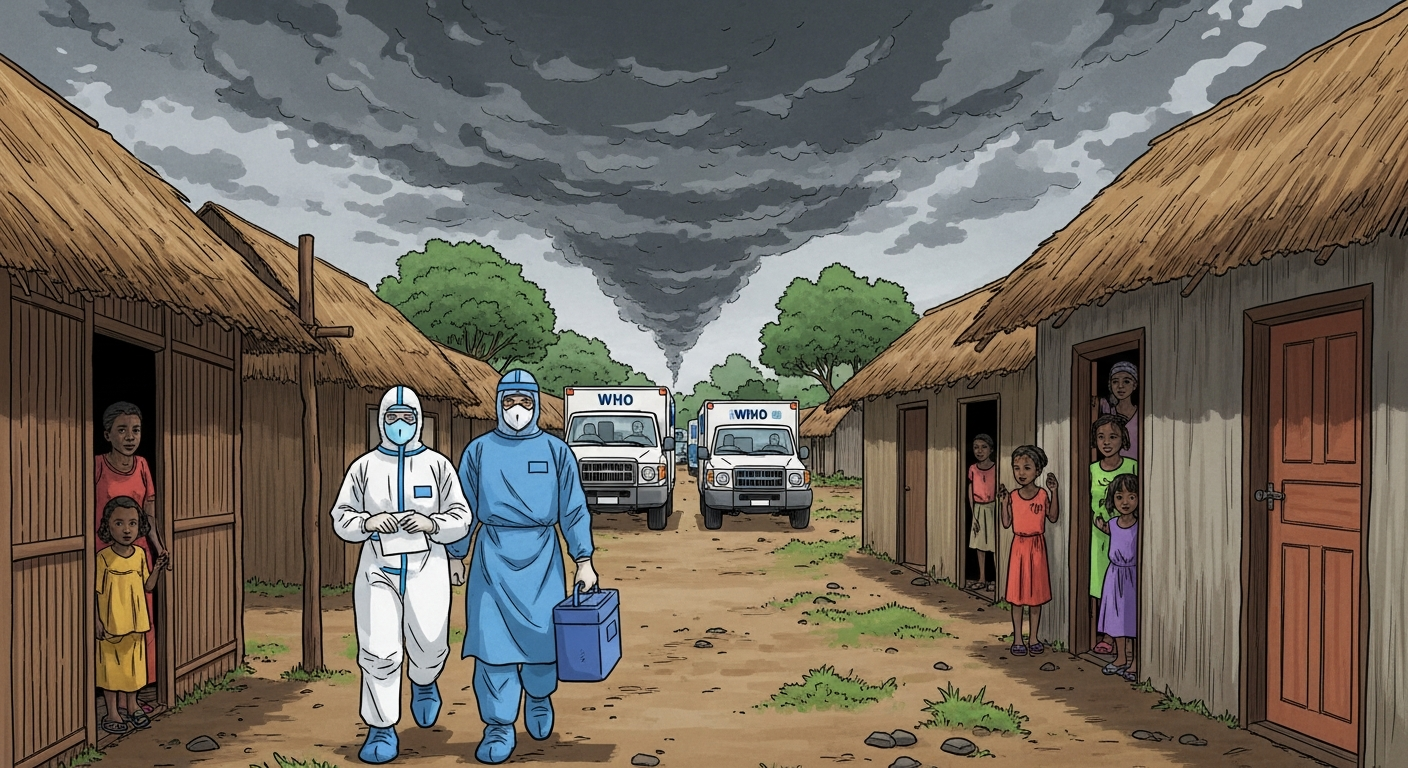
Image for: WHO Declares Global Health Emergency Over Ebola Outbreak

WHO Declares Global Health Emergency Over Ebola Outbreak

The World Health Organization declared a global public health emergency due to a growing Ebola outbreak in central Africa, involving the rare Bundibugyo virus strain.
Jump to The Flipside Perspectives

The World Health Organization (WHO) announced a global public health emergency on Sunday, responding to a escalating Ebola outbreak in central Africa. The declaration, made by WHO Director-General Tedros Adhanom Ghebreyesus, signifies that the outbreak, primarily affecting the Democratic Republic of the Congo (DRC) and Uganda, now meets the criteria for a public health emergency of international concern. This decision follows reports of more than 300 suspected infections and approximately 88 fatalities linked to the highly virulent disease.

"There are significant uncertainties to the true number of infected persons and geographic spread associated with this event at the present time." — Tedros Adhanom Ghebreyesus, WHO Director-General

The current outbreak involves the Bundibugyo virus strain, a rarer form of Ebola for which there is currently no approved vaccine or proven therapeutic treatment. Director-General Ghebreyesus acknowledged the significant uncertainties surrounding the true number of infected individuals and the geographical extent of the outbreak. Despite the gravity of the situation, WHO officials clarified that the outbreak does not currently classify as a pandemic, primarily because Ebola's transmission mechanism differs from airborne respiratory viruses. Instead of advocating for border closures, the WHO has urged governments to implement coordinated international containment strategies. These measures include enhanced surveillance, meticulous contact tracing, stringent infection control protocols, and cross-border screening to mitigate further spread.

The epicenter of the outbreak is largely concentrated in Ituri Province, located in eastern Congo, in close proximity to the Ugandan border. As of May 16, health authorities had confirmed eight laboratory-verified cases, alongside 246 suspected cases and 80 suspected deaths, predominantly within the designated outbreak zone in Congo. While the vast majority of known infections have occurred within the DRC, two additional cases were identified in Uganda. These Ugandan cases involved individuals who had traveled from the affected region in Congo, with one of the infected travelers subsequently succumbing to the illness at a hospital in Kampala, Uganda’s capital city. Further complicating containment efforts, one Ebola case was confirmed in Kinshasa, the Congolese capital, situated approximately 1,000 kilometers from the primary outbreak area. Officials have linked this Kinshasa infection to travel originating from the Ituri outbreak zone. The emergence of suspected cases in North Kivu province has also heightened concerns regarding the potential for the virus to disseminate into more densely populated urban centers.

The timeline of the outbreak indicates that the first suspected Ebola patient was a 59-year-old man who developed symptoms on April 24 and died three days later in Ituri Province. However, health authorities did not formally identify the outbreak until early May, after initial reports began circulating on social media. By this point, an estimated 50 deaths had already occurred. Laboratory confirmation of the Ebola outbreak, which identified the Bundibugyo strain, was achieved on May 15. Jean Kaseya, a health official, stated, "This outbreak started in April. So far, we don’t know the index case. It means we don’t know how far is the magnitude of this outbreak."

Containment efforts are significantly hampered by several challenging factors inherent to the region. These include ongoing armed conflict in eastern Congo, large-scale population movements, and extensive cross-border travel throughout the Lake Albert and Great Lakes regions. This current event marks the third recorded detection of the Bundibugyo Ebola strain and represents the largest outbreak involving this particular variant to date. Historically, Congo has endured more than 20 Ebola outbreaks, establishing it as one of the nations most severely impacted by the virus. Ebola is transmitted through direct contact with bodily fluids from infected individuals and is known to cause severe hemorrhagic illness, characterized by exceptionally high fatality rates.

Advertisement

The Flipside: Different Perspectives

Progressive View

The WHO's declaration of a global public health emergency over the Ebola outbreak in Central Africa highlights profound issues of global health equity and the urgent need for robust international cooperation. A progressive viewpoint emphasizes that this crisis is not merely a localized event but a symptom of systemic vulnerabilities, including underfunded public health systems, ongoing conflict, and population displacement in regions like the Democratic Republic of the Congo. These factors exacerbate disease transmission and hinder effective containment, making it a collective global responsibility to act.

Effective response requires more than just medical intervention; it demands addressing the root causes that leave communities susceptible to such outbreaks. This includes significant investment in strengthening health infrastructure in developing nations, ensuring equitable access to medical resources, and supporting conflict resolution efforts that stabilize affected areas. Progressives would advocate for comprehensive international aid packages, debt relief, and technology transfer to empower local health workers and build resilient health systems. The focus must be on protecting the most vulnerable populations, recognizing that a threat to one region's health security is ultimately a threat to global well-being, necessitating a coordinated, compassionate, and well-resourced collective effort.

Conservative View

The declaration of a global health emergency by the WHO regarding the Ebola outbreak in Central Africa underscores the critical need for efficient and targeted international responses, without undue overreach that could stifle economic activity or infringe on national sovereignty. From a conservative perspective, the priority must be on supporting the affected nations—primarily the Democratic Republic of the Congo and Uganda—in strengthening their internal public health infrastructures and implementing robust, localized containment measures. Emphasis should be placed on accurate data collection and transparent reporting, ensuring that resources are allocated effectively and not diverted by bureaucratic inefficiencies.

While humanitarian aid is appropriate, any international intervention must respect the autonomy of sovereign states and avoid broad, economically damaging restrictions like blanket travel bans unless absolutely necessary and scientifically justified. Such measures often disproportionately harm local economies and individual liberties. Conservatives would advocate for private sector innovation in developing vaccines and treatments, alongside clear accountability for any international organizations involved. The focus should remain on empowering local communities and governments to manage the crisis with external support that is practical, limited, and results-oriented, rather than expanding the scope of international bodies or imposing top-down mandates that may not suit the specific conditions on the ground.

Common Ground

Despite differing approaches, conservatives and progressives can find significant common ground in addressing the Ebola outbreak in Central Africa. Both sides agree on the critical importance of a rapid, effective, and scientifically guided response to contain the virus and prevent its wider spread. There is universal agreement on the humanitarian imperative to save lives and alleviate suffering among affected populations in the Democratic Republic of the Congo and Uganda.

Both viewpoints support the need for accurate data collection, transparent communication, and efficient allocation of resources to combat the disease. There is shared recognition that international coordination is essential, particularly for cross-border surveillance, contact tracing, and infection control measures. Furthermore, both conservatives and progressives can unite in advocating for accelerated research and development of vaccines and therapeutic treatments for the Bundibugyo strain. A pragmatic approach, combining targeted aid with local empowerment and international collaboration, is a shared goal to mitigate the immediate crisis and build more resilient health systems for the future.

What's your view on this story? Share your thoughts and remember to consider multiple perspectives and being respectful when forming and voicing your opinion. "If you resort to personal attacks, you have already lost the debate..."

Advertisement

Contact Us About This Article

Have a question or comment about this article? We'd love to hear from you.

About Fair Side News

At Fair Side News, we believe in presenting news with perspectives from both sides of the political spectrum. Our goal is to help readers understand different viewpoints and find common ground on important issues.