

Breaking
Sponsor Advertisement
U.S., Nigerian Forces Kill Senior ISIS Global Leader
Image for: U.S., Nigerian Forces Kill Senior ISIS Global Leader

U.S., Nigerian Forces Kill Senior ISIS Global Leader

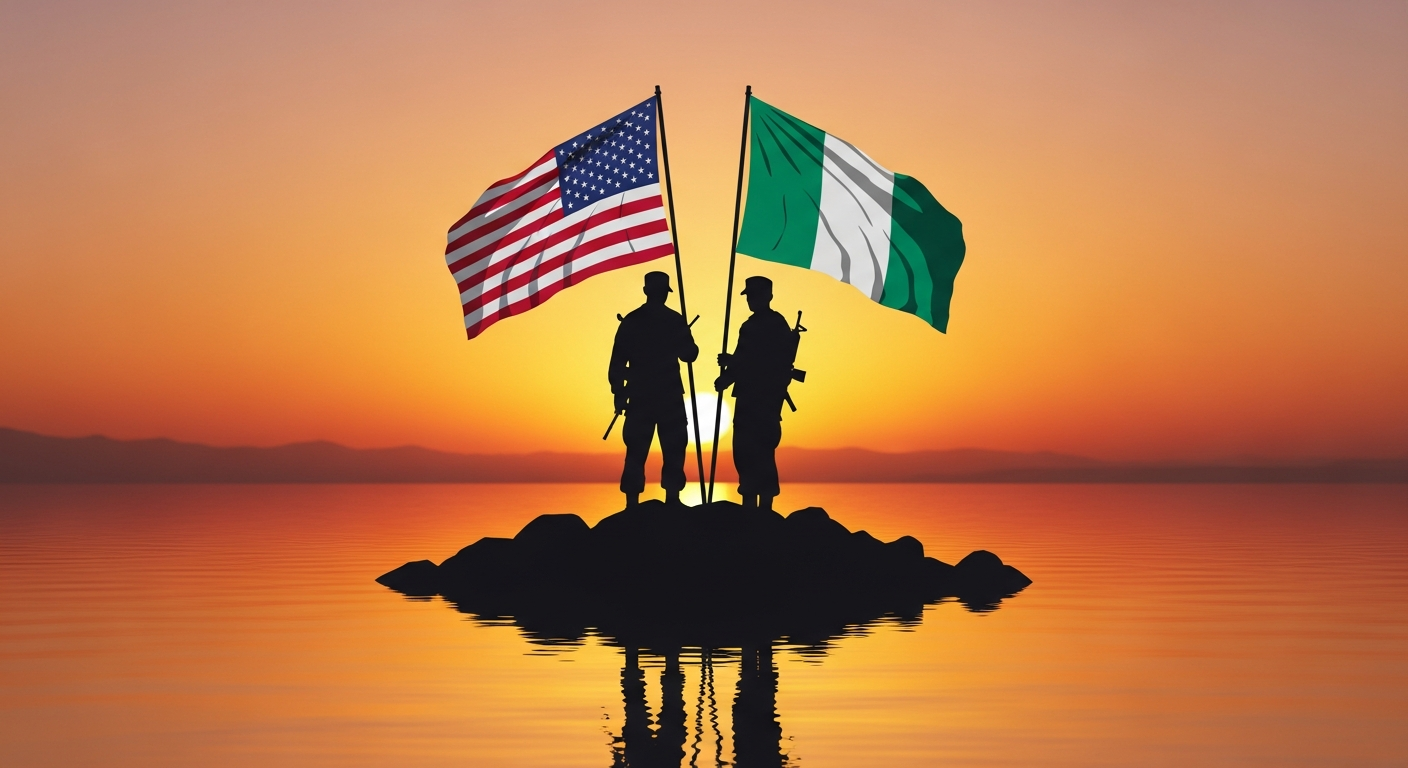
U.S. and Nigerian forces conducted a joint counterterrorism operation in northeastern Nigeria, killing Abu-Bilal al-Minuki, a senior ISIS global leader.
Jump to The Flipside Perspectives

U.S. and Nigerian military forces have successfully conducted a joint counterterrorism operation in northeastern Nigeria, resulting in the death of Abu-Bilal al-Minuki, a prominent leader within the Islamic State terror group. President Donald Trump announced the successful mission on Saturday, identifying al-Minuki as the second-in-command of Islamic State globally, responsible for overseeing the group’s international operations network.

"Tonight, at my direction, brave American forces and the Armed Forces of Nigeria flawlessly executed a meticulously planned and very complex mission." — President Donald Trump

The meticulously planned operation took place earlier this week in the Lake Chad Basin region, an area known for its instability and ongoing insurgencies involving ISIS-linked militants and Boko Haram factions. The region spans Nigeria, Chad, Niger, and Cameroon, where groups like the Islamic State West Africa Province (ISWAP) remain active. Forces reportedly targeted a compound located on small islands within the Lake Chad region during the raid.

According to President Trump and Nigerian officials, early assessments indicate that al-Minuki was killed alongside several lieutenants and additional ISIS fighters during the operation. No U.S. service members were injured during the mission.

President Donald Trump stated, "Tonight, at my direction, brave American forces and the Armed Forces of Nigeria flawlessly executed a meticulously planned and very complex mission." He added that al-Minuki "will no longer terrorize the people of Africa or help plan operations to target Americans." President Trump also extended his gratitude to the Nigerian government for its cooperation with U.S. military and intelligence officials throughout the counterterrorism effort.

Nigerian President Bola Ahmed Tinubu confirmed the operation's success in a public statement released Saturday. President Tinubu described the strike as a major example of effective cooperation between Nigeria and the U.S. in combating terrorism across West Africa. He further credited expanded intelligence-sharing efforts between the two countries for facilitating the location and targeting of the ISIS compound.

Abu-Bilal al-Minuki, also known by aliases such as Abu-Mainok or Abu Bilal al-Manuki, was reportedly born in Nigeria’s Borno State. He steadily rose through the ranks of ISWAP before assuming a broader leadership role within the global ISIS network. His influence extended to various critical aspects of the organization's operations.

In 2023, U.S. officials designated al-Minuki as a Specially Designated Global Terrorist due to his alleged involvement in planning attacks, kidnappings, and weapons operations. Authorities have linked him to several major terrorist activities, including the 2018 kidnapping of schoolgirls in Dapchi, Nigeria. Furthermore, U.S. officials alleged that al-Minuki played a significant role in overseeing ISIS media operations, financing networks, and the development of explosives, drones, and advanced weapons systems. His death represents a substantial disruption to the group's global command structure and operational capabilities.

The mission involved Nigerian troops from Joint Task Force Operation HADIN KAI working in close coordination with United States Africa Command (AFRICOM). This joint effort underscores the ongoing commitment of both nations to degrade and defeat terrorist organizations that threaten regional and international security.

The Lake Chad Basin has long been one of Africa's most unstable regions, plagued by persistent insurgencies. U.S. Africa Command has continued to conduct joint operations and airstrikes across the continent in coordination with regional governments, targeting ISIS and al-Shabaab networks. Recent operations in 2026 have included strikes against al-Shabaab and ISIS-Somalia targets conducted alongside the Somali government. This latest operation marks one of the most significant counterterrorism missions announced by the Trump administration in Africa since President Trump returned to office earlier this year, highlighting a sustained focus on combating global terrorism.

Advertisement

The Flipside: Different Perspectives

Progressive View

While the elimination of a senior ISIS leader like Abu-Bilal al-Minuki can be a tactical success in counterterrorism, a progressive perspective emphasizes the need for a comprehensive approach that extends beyond military action. While acknowledging the immediate threat posed by extremist groups, it is crucial to address the underlying systemic issues that contribute to radicalization and instability in regions like the Lake Chad Basin. Poverty, lack of economic opportunity, political grievances, and climate change-induced resource scarcity often fuel recruitment by groups such as ISIS and Boko Haram.

A sustainable strategy must integrate robust diplomatic efforts, humanitarian aid, and long-term development programs alongside security operations. Relying solely on military solutions risks creating power vacuums or unintended consequences, potentially exacerbating cycles of violence and displacement. Progressives advocate for adherence to international law and human rights standards in all operations, ensuring accountability and minimizing civilian harm. True security requires not just neutralizing threats, but also fostering conditions for peace, justice, and collective well-being, addressing the root causes that allow extremism to flourish.

Conservative View

The successful joint operation in Nigeria, announced by President Donald Trump, demonstrates a decisive commitment to protecting American interests and national security by aggressively confronting global terrorism. The elimination of Abu-Bilal al-Minuki, a senior ISIS leader, sends a clear message that the United States will pursue and neutralize threats wherever they emerge. This action underscores the importance of a strong military and robust intelligence capabilities to project power and defend against radical Islamist groups. Conservatives emphasize that a core function of government is to provide for the common defense, and this mission exemplifies that principle.

Effective international partnerships, particularly with sovereign nations willing to confront shared threats, are crucial for counterterrorism efforts. The cooperation with Nigeria highlights the strategic value of alliances that directly contribute to U.S. security objectives. By disrupting ISIS leadership and operational networks abroad, the administration is taking proactive steps to prevent future attacks that could target Americans or allies. This operation reinforces the belief in American exceptionalism and the necessity of maintaining a dominant global presence to safeguard freedom and stability against those who seek to undermine it through terror.

Common Ground

There is broad consensus on the fundamental necessity of combating terrorism and protecting national security interests. Both conservative and progressive viewpoints agree that extremist organizations like ISIS pose a significant threat to global stability and human lives, warranting decisive action. The successful joint operation between U.S. and Nigerian forces highlights the shared value of international cooperation and intelligence sharing as critical tools in the fight against these groups.

Furthermore, there is agreement that regional stability in areas like the Lake Chad Basin is vital to preventing the spread of extremist ideologies and safeguarding populations. While approaches may differ, both sides recognize that a multifaceted strategy is required. Military interventions, when necessary and precisely executed, can disrupt terrorist networks. However, there is also a shared understanding that addressing underlying socioeconomic factors, promoting good governance, and fostering economic development can contribute to long-term solutions and diminish the appeal of radicalization, creating more resilient communities less susceptible to extremist recruitment.

What's your view on this story? Share your thoughts and remember to consider multiple perspectives and being respectful when forming and voicing your opinion. "If you resort to personal attacks, you have already lost the debate..."

Advertisement

Contact Us About This Article

Have a question or comment about this article? We'd love to hear from you.

About Fair Side News

At Fair Side News, we believe in presenting news with perspectives from both sides of the political spectrum. Our goal is to help readers understand different viewpoints and find common ground on important issues.