

Breaking
Sponsor Advertisement
Trump Administration Restores Pride Flag at Stonewall Monument
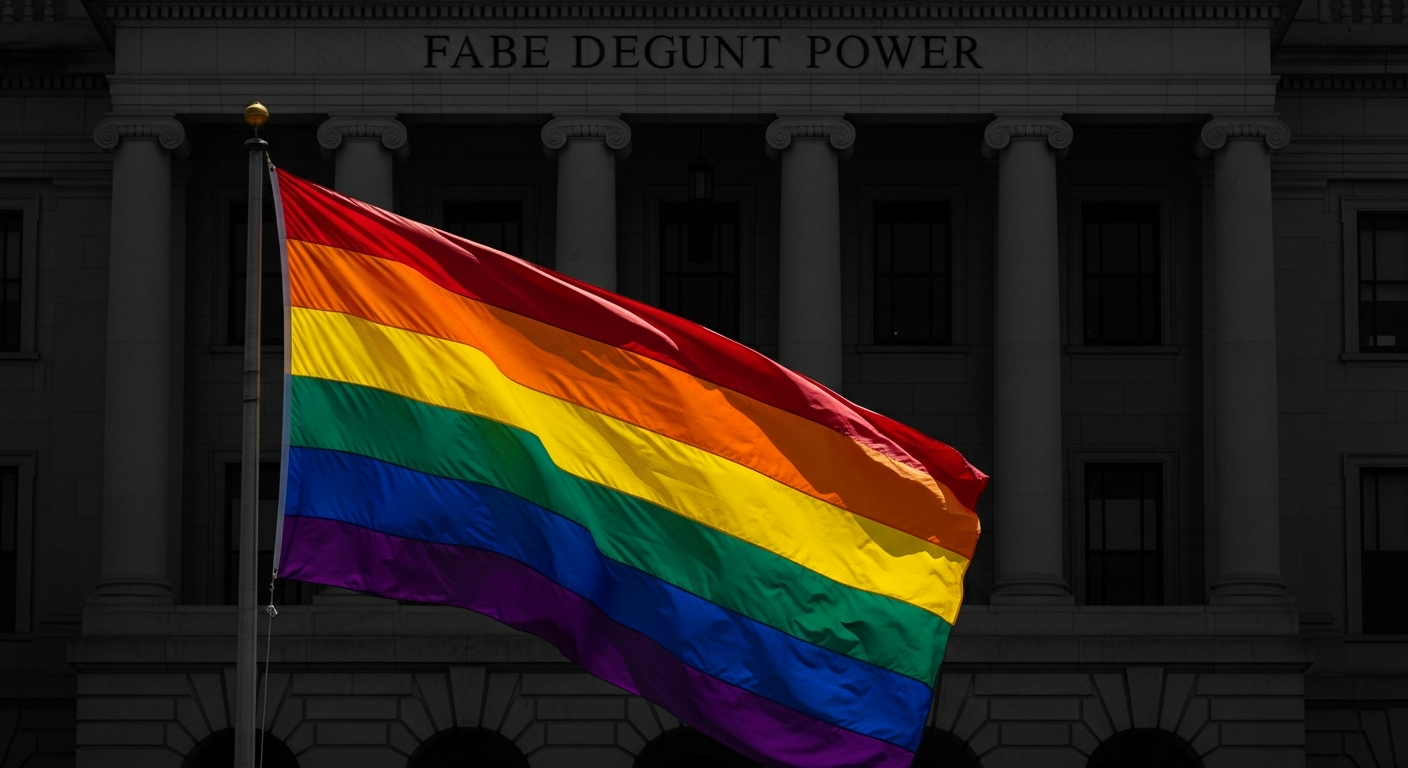
AI-generated image for: Trump Administration Restores Pride Flag at Stonewall Monument

Trump Administration Restores Pride Flag at Stonewall Monument

The Trump administration has agreed to allow the Pride flag to fly again at the Stonewall National Monument, settling legal challenges that arose after its earlier removal.
Jump to The Flipside Perspectives

The Trump administration announced this week an agreement to restore the Pride flag display at the Stonewall National Monument in New York City, a reversal that follows legal challenges initiated after the flag's earlier removal. The Department of the Interior, through the National Park Service, had directed the removal of the flag earlier this year, citing an existing policy that prohibits non-government flags from being officially flown at national monuments. This directive prompted immediate criticism and legal action from various LGBT advocacy groups and civil rights attorneys.

The dispute centered on the symbolic and historical significance of the Pride flag in relation to the Stonewall site. Opponents of the flag's removal argued that the Pride flag is not merely a political banner but an intrinsic symbol historically tied to the Stonewall Inn and the broader LGBTQ+ rights movement. They contended that separating the flag from the monument's purpose would diminish or erase its historical meaning. The Stonewall National Monument commemorates the pivotal 1969 unrest at the Stonewall Inn in Greenwich Village, an event widely recognized as a catalyst for the modern gay rights movement and a major inspiration for subsequent Pride marches and legal campaigns for LGBTQ+ equality across the United States and beyond.

On Monday, administration officials reversed their initial stance, agreeing to a settlement that will see the Pride flag reinstated. This decision effectively ends weeks of litigation and public criticism directed at the administration's initial policy enforcement. Attorney Alexander Kristofcak, who represented the challengers in the legal dispute, articulated the core argument that prevailed. He stated, "the Pride flag belongs at Stonewall because it symbolizes the history of the LGBT rights movement and the broader struggle for equality." Kristofcak further emphasized that the flag is "not merely a political expression, but part of the monument’s historical identity," underscoring its deep connection to the site's commemorative purpose.

The initial removal of the flag was defended by some who argued that the government was merely enforcing neutral flag display rules applicable to all federal properties, rather than specifically targeting the LGBTQ+ community. This perspective maintains that federal policy should be applied uniformly to avoid the appearance of favoritism or endorsement of specific groups or causes, even if well-intentioned. However, critics countered that applying a generic rule without considering the specific, unique historical context of a monument dedicated to a particular civil rights movement amounted to an oversight of the monument's very essence.

The administration's reversal has been met with praise from LGBTQ+ advocates and civic leaders. New York City Mayor Zohran Mamdani publicly celebrated the decision, as reported by the Western Journal. "This is a victory for the LGBTQ+ community and for our entire city," Mamdani stated, adding that New Yorkers "would not allow their history to be rewritten." Brad Hoylman-Sigal also commended the outcome while criticizing the administration for its initial attempt to remove the symbol.

This episode highlights a recurring theme in contemporary American politics, particularly during President Trump's administration, where cultural and symbolic disputes frequently escalate into legal battles involving questions of identity, federal authority, and the interpretation of historical narratives. For the White House, the ongoing dispute had become a distraction, drawing resources and attention. For activists, it served as a significant mobilizing cause, galvanizing support and reaffirming the importance of symbolic representation.

The settlement avoids a potentially prolonged and costly court fight, which could have set precedents regarding the display of non-government flags at national monuments with specific historical ties. It also underscores that even seemingly minor or symbolic policy changes, when connected to significant historical landmarks and civil rights movements, can carry substantial legal, political, and social consequences. The outcome ensures that the Pride flag will once again fly over the Stonewall National Monument, marking a restoration of a widely recognized symbol at one of the most significant landmarks in modern civil rights history.

Advertisement

The Flipside: Different Perspectives

Progressive View

Progressives view the administration's initial removal of the Pride flag from Stonewall National Monument as a deeply problematic act that minimized the historical significance of the site and the struggles of the LGBTQ+ community. For progressives, the Pride flag is not merely a "non-government flag" but an indispensable symbol of the LGBTQ+ rights movement, inextricably linked to the Stonewall Uprising and its legacy. Its removal was perceived as an attempt to erase or diminish this crucial part of American history and identity. The monument was established precisely to commemorate the events of 1969, which were foundational to the fight for equality. Therefore, applying a generic flag policy without considering this unique, specific historical context is seen as a failure to understand the monument's purpose and an affront to the community it honors. The reversal is celebrated as a victory for social justice, affirming the importance of symbolic representation and validating the historical narrative of marginalized groups. It underscores the progressive belief that public spaces and federal institutions should reflect and celebrate the diverse histories and identities of all Americans, actively countering systemic marginalization.

Conservative View

From a conservative perspective, the initial decision to remove the Pride flag at Stonewall National Monument could be viewed as an adherence to established federal policy regarding the display of non-government flags on federal property. The Department of the Interior's directive to the National Park Service was likely intended to maintain a neutral stance and ensure uniform application of rules across all national monuments. This approach emphasizes the principle of limited government and the avoidance of government endorsement for specific cultural or political expressions, even those with significant historical ties. Conservatives often advocate for strict interpretation and enforcement of existing regulations to prevent subjective decision-making or the creation of precedents that could lead to a proliferation of various non-official flags on federal land. While acknowledging the historical significance of Stonewall, proponents of the initial removal might argue that the monument itself, not a specific flag, is the designated symbol of commemoration, and that federal property should remain a neutral space, free from partisan or group-specific symbols. The reversal, therefore, might be seen as a capitulation under pressure, potentially undermining the consistent application of federal guidelines.

Common Ground

Despite differing interpretations of the initial flag removal, there are areas of common ground regarding the Stonewall National Monument and similar historical sites. All sides can agree on the importance of preserving and respecting national monuments as sites of historical significance and public education. There is a shared interest in avoiding prolonged and costly litigation, recognizing that court battles can be resource-intensive and often divert attention from core issues. Furthermore, both conservative and progressive viewpoints can converge on the value of clear, well-defined policies for federal properties, even if they disagree on the interpretation or application of those policies in specific contexts. A constructive dialogue could focus on how federal policies can be crafted or interpreted to respectfully acknowledge the unique historical and cultural significance of monuments dedicated to specific civil rights movements, without necessarily compromising principles of neutrality or uniform application. Ultimately, a shared goal could be to ensure that national monuments effectively serve their purpose of commemoration and education for all citizens.

What's your view on this story? Share your thoughts and remember to consider multiple perspectives and being respectful when forming and voicing your opinion. "If you resort to personal attacks, you have already lost the debate..."

Advertisement

Contact Us About This Article

Have a question or comment about this article? We'd love to hear from you.

About Fair Side News

At Fair Side News, we believe in presenting news with perspectives from both sides of the political spectrum. Our goal is to help readers understand different viewpoints and find common ground on important issues.