


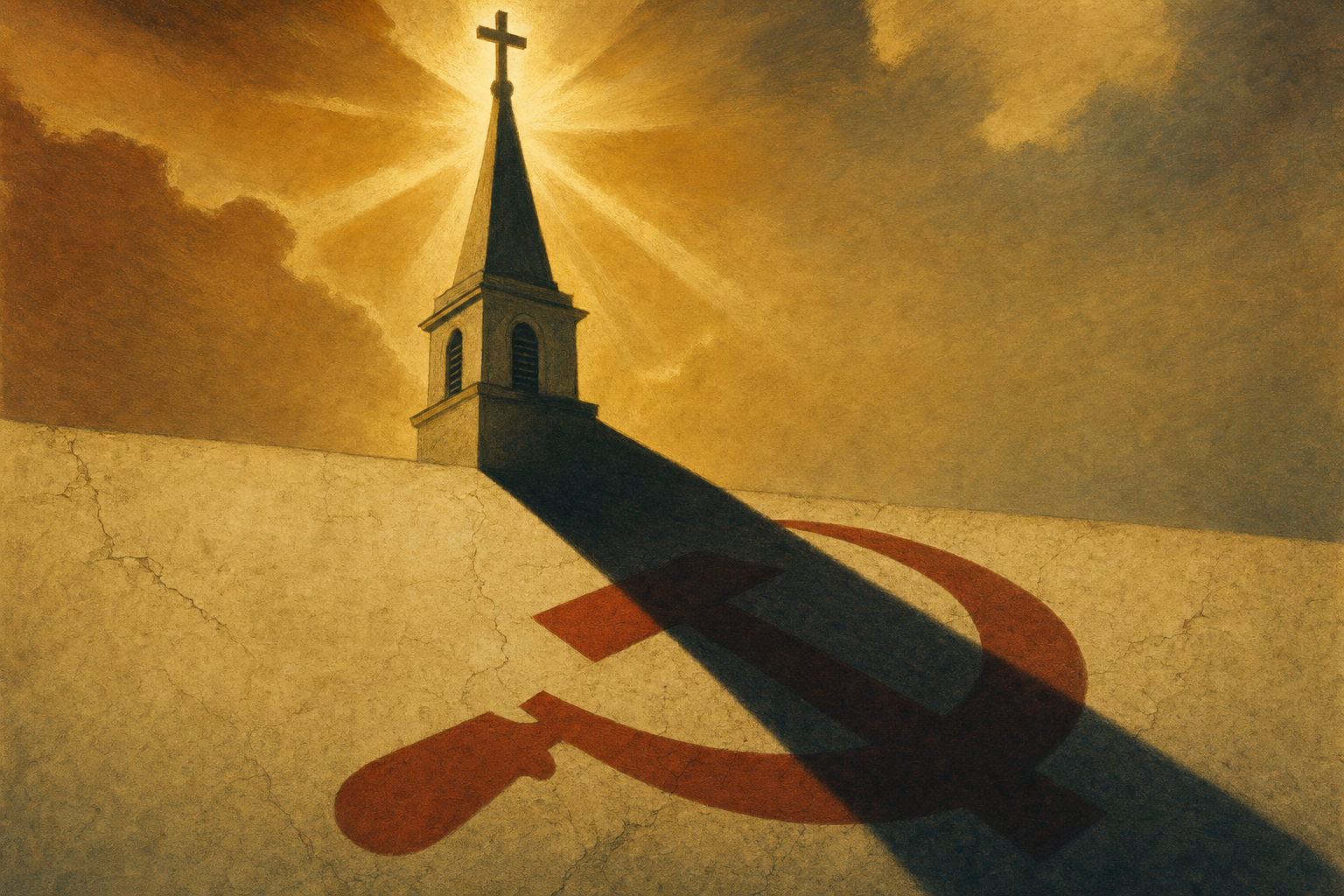
President Donald Trump delivered a speech to evangelical conservatives on Thursday at the Faith & Freedom Coalition’s Road to Majority conference in Washington, D.C., where he expressed concerns about the growing influence of socialism and communism in the United States. During his address at the Washington Hilton, President Trump made a striking comment, joking that he would be “the greatest communist in history” before immediately pivoting to a strong condemnation of communist regimes for their historical suppression of religious freedom.
"I think I’d be the greatest communist in history. I’d give away housing, food and more for free." — President Donald Trump, Address to Faith & Freedom Coalition
The event marked President Trump’s return to the Washington Hilton, a location he referenced at the outset of his speech. “We’re going to have a more pleasant experience,” President Trump told the audience, alluding to an incident earlier in the year when an attempted assassination disrupted the White House Correspondents’ Dinner at the same venue. Hundreds of evangelical Christian supporters were in attendance, a key demographic for the President and the Faith & Freedom Coalition.
Central to President Trump's remarks was his critique of what he characterized as the increasing presence of socialist ideologies within the Democratic Party. He illustrated this point by joking about the political appeal of promising extensive government benefits. “I think I’d be the greatest communist in history,” President Trump stated. “I’d give away housing, food and more for free.” This hypothetical was quickly followed by a stark warning about the nature of communist governments. “All communists are Godless,” he asserted. “They will close your churches. They will kill your people, and that’s what they’re about.” The audience responded with applause and laughter to these comments, indicating a receptive environment for his message.
Prior to his appearance on stage, President Trump had echoed similar sentiments on social media, posting that communist governments have historically engaged in violent persecution of religious believers. He wrote that communist regimes “will close your churches, they will kill your people,” reinforcing a core theme of his address.
President Trump’s comments on socialism came amidst recent primary election victories by several Democratic socialist candidates in New York, some of whom were backed by New York City Mayor Zohran Mamdani. During his speech, President Trump referred to Mayor Mamdani as “a nice guy” but proceeded to criticize his political ideology, predicting it would be detrimental to New York City.
Beyond the warnings against socialism and communism, President Trump also highlighted several policies and initiatives undertaken by his administration aimed at protecting religious liberty. He specifically mentioned the establishment of a Department of Justice task force dedicated to combating anti-Christian discrimination. Additionally, he referenced guidance issued by the Education Department intended to safeguard prayer in schools, underscoring his administration's commitment to these protections.
The President also addressed broader social policies, detailing administration initiatives concerning transgender issues. These included efforts to prohibit transgender athletes from participating in women’s sports, restrict gender-transition procedures for minors, and formally recognize only two sexes under federal policy. These positions align with conservative social values often championed by the evangelical community.
Shifting to foreign policy, President Trump touched upon U.S. efforts to counter Islamist militant groups in Africa, particularly those responsible for attacks against Christian communities in Nigeria. He noted that the United States has supported operations targeting extremist organizations implicated in the persecution of Christians, citing reports from the Daily Mail.
The Faith & Freedom Coalition has been a steadfast political ally of President Trump since his initial presidential campaign, regularly hosting him at its annual policy conferences. The organization's membership is predominantly composed of evangelical Christian conservatives, a group that has historically played a crucial role in mobilizing religious voters for Republican candidates. President Trump's appearance at this conference reinforces his ongoing emphasis on religious liberty, immigration, and opposition to socialism as central tenets of his administration and broader political agenda, particularly as the nation looks towards the 2026 midterm elections.

