


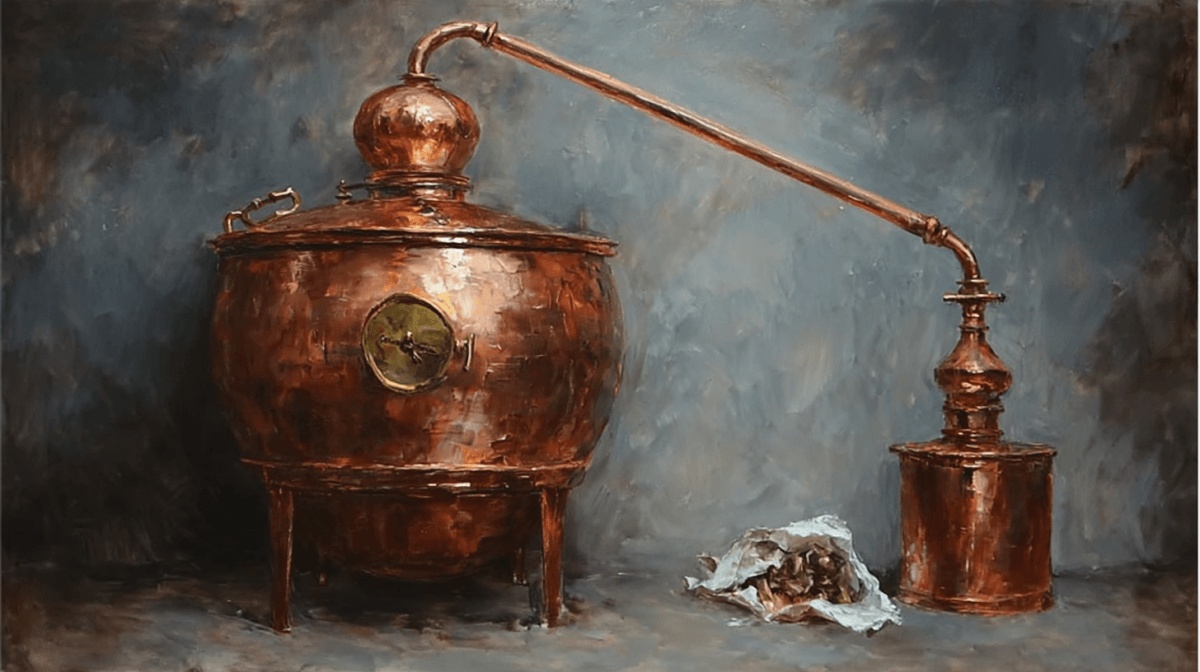
A federal appeals court has delivered a significant blow to a nearly 160-year-old federal restriction, striking down a law that banned the home production of distilled spirits. On April 10, 2026, the 5th U.S. Circuit Court of Appeals concluded that the Reconstruction-era statute, which had long criminalized the non-commercial distillation of alcohol like whiskey or vodka in private homes without federal authorization, overstepped Congress’s constitutional authority. This landmark decision marks a notable shift in judicial interpretation regarding the limits of federal power over personal activities and reignites debate over the scope of government regulation.
"the Fifth Circuit has ruled that the law prohibiting home distilleries 'violates the Constitution’s Taxation and Necessary and Proper clauses." — 5th U.S. Circuit Court of Appeals Ruling
The statute, originally enacted in the 19th century, was designed primarily to prevent tax evasion in alcohol production. It carried severe penalties for violations, including fines of up to $10,000 and prison terms of up to five years. The legal challenge against this long-standing prohibition was initiated by the Hobby Distillers Association, alongside several individual members. They contended that the law was an outdated relic that no longer aligned with modern societal conditions, arguing it unjustly criminalized purely non-commercial hobby activity and personal experimentation, even in instances where no revenue loss or commercial intent was present.
In its ruling, the appellate court found that the federal government had stretched its constitutional authority too far in its defense of the prohibition. The court specifically stated that the statute could not be justified under Congress’s taxation power because it failed to effectively support revenue collection. Instead, the court determined, the law effectively prevented taxable goods from being produced in the first place, thereby undermining its stated purpose. Circuit Judge Edith Hollan Jones, writing for the panel, highlighted this inconsistency, noting that the law operated in a manner that blocked alcohol production altogether rather than regulating it for taxation purposes, making it incompatible with the government’s claimed authority under federal tax powers. The court ultimately concluded that such an approach exceeded constitutional limits.
Beyond the immediate scope of home distilling, the ruling also raised broader constitutional concerns regarding the permissible extent of federal authority into private life. The court issued a warning that accepting the government’s interpretation of its tax power could establish a dangerous precedent, potentially justifying the criminalization of a wide array of ordinary household activities if they were only loosely connected to potential revenue concerns. Judge Jones suggested that if this expansive logic were to be accepted, it could significantly blur the critical boundary between legitimate federal regulatory authority and fundamental personal liberty.
The plaintiffs in the case described their distilling activities as small-scale, non-commercial experimentation. One plaintiff, as reported by Fox 5 DC, cited personal projects involving flavored spirits and even fuel distillation, emphasizing that the law treated recreational activity as criminal conduct despite its complete lack of commercial impact.
The appellate court’s decision upheld an earlier 2024 ruling from a lower federal court, which had similarly found the law unconstitutional but had paused its enforcement pending the outcome of the appeal. With the appellate court’s ruling now finalized, that earlier injunction is expected to take effect, effectively ending the enforcement of the prohibition within the geographical jurisdiction of the 5th Circuit.
Legal advocates representing the plaintiffs hailed the outcome as a major affirmation of individual freedom and a significant narrowing of federal authority. They asserted that the decision reinforces a crucial distinction between legitimate tax enforcement and the unwarranted regulation of purely personal, non-commercial conduct. Federal agencies responsible for defending the law, including the Justice Department and various alcohol regulatory authorities, did not immediately issue public responses following the ruling. Their silence leaves open the possibility of further legal steps or clarifications, though the current decision represents a substantial setback for the government’s position.
This ruling contributes to a growing pattern of federal courts revisiting and re-evaluating long-standing statutes to determine their compatibility with modern constitutional interpretation. In this particular instance, the court’s decision places renewed attention on how Reconstruction-era regulations continue to influence contemporary debates over taxation authority, personal freedom, and the appropriate reach of federal enforcement power.

