

Breaking
Fair Side News (formerly BalancedRight News), was created to help readers move b… | ● BREAKING Breaking: Director of National Intelligence Tulsi Gabbard Resigns From Trump Cabinet | ● BREAKING The Final Checkered Flag: NASCAR Mourns the Tragic Passing of Two-Time Cup Champion Kyle Busch | President Trump Backs Permanent Daylight Saving Time Bill | Iran War Costs Soar as US Aircraft Losses Mount | Trump, Netanyahu Reportedly Clash Over Iran Strategy | Trump Issues EO to Bolster Financial System Integrity | DOJ Prepares Raúl Castro Indictment for 1996 Shootdown | Trump-Backed Challenger Defeats Incumbent Massie in Kentucky Primary | SCOTUS Justices Clash Publicly Over Redistricting Procedure | FBI Reports Historic National Crime Reduction in 2025 | Fair Side News (formerly BalancedRight News), was created to help readers move b… | ● BREAKING Breaking: Director of National Intelligence Tulsi Gabbard Resigns From Trump Cabinet | ● BREAKING The Final Checkered Flag: NASCAR Mourns the Tragic Passing of Two-Time Cup Champion Kyle Busch | President Trump Backs Permanent Daylight Saving Time Bill | Iran War Costs Soar as US Aircraft Losses Mount | Trump, Netanyahu Reportedly Clash Over Iran Strategy | Trump Issues EO to Bolster Financial System Integrity | DOJ Prepares Raúl Castro Indictment for 1996 Shootdown | Trump-Backed Challenger Defeats Incumbent Massie in Kentucky Primary | SCOTUS Justices Clash Publicly Over Redistricting Procedure | FBI Reports Historic National Crime Reduction in 2025 |
Sponsor Advertisement
Iran War Costs Soar as US Aircraft Losses Mount
Image for: Iran War Costs Soar as US Aircraft Losses Mount

Iran War Costs Soar as US Aircraft Losses Mount

The ongoing Iran conflict has seen 42 U.S. aircraft destroyed or damaged, including several friendly fire incidents, pushing total war costs to $29 billion. These losses include fighter jets, drones, and transport aircraft, raising concerns about operational effectiveness and financial burden.
Jump to The Flipside Perspectives

A recent congressional report has brought to light the escalating financial and material costs of the ongoing Iran conflict, revealing that 42 American aircraft have been either destroyed or damaged since the fighting commenced earlier this year. The report, cited by the Daily Mail, indicates that these losses contribute to a total war expenditure that has now reached approximately $29 billion, marking a significant increase from $25 billion just weeks prior.

"the most daring operation in US history" — President Donald Trump

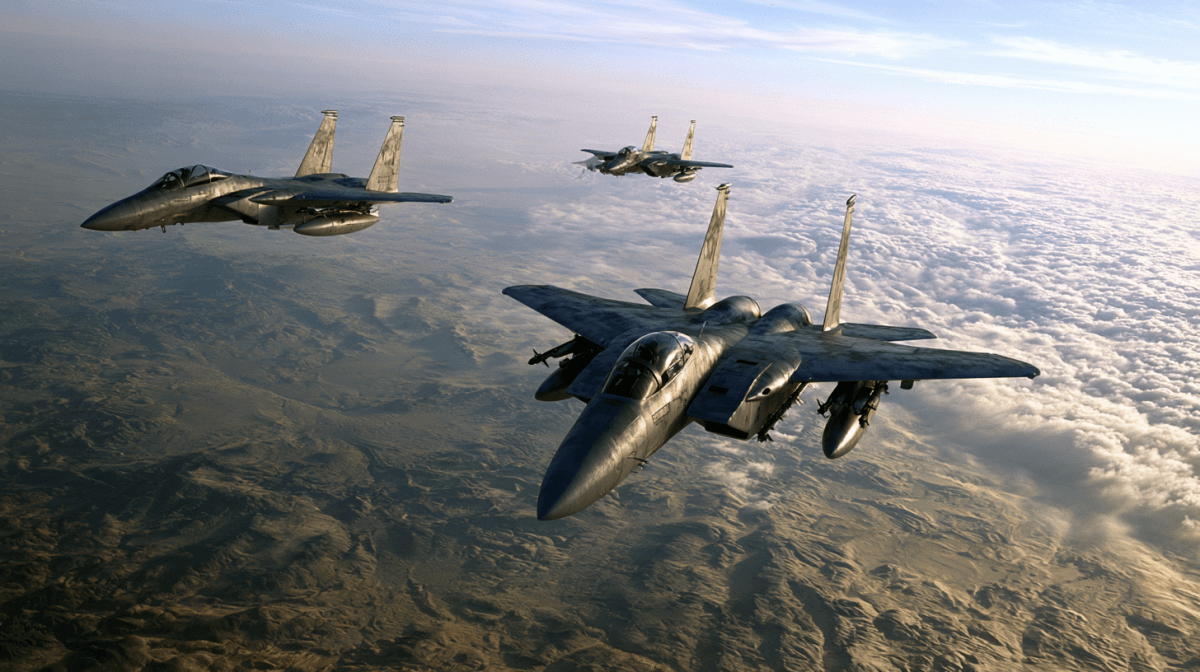
The conflict, codenamed Operation Epic Fury, began on February 28. Since then, 32 aircraft have been reported as outright destroyed. Among the most critical losses were four F-15E Strike Eagle fighter jets. Three of these advanced aircraft were reportedly shot down on March 1 in a catastrophic friendly fire incident involving Kuwaiti air defenses. Each F-15E is estimated to be worth around $100 million when accounting for weapons systems, equipment, and operational costs. A fourth F-15E was reportedly lost to Iranian forces on April 3, an event that President Donald Trump later characterized as “the most daring operation in US history” due to the subsequent rescue mission for the stranded crew members.

The rescue operation itself reportedly incurred additional substantial losses. According to the congressional report, two MC-130J Commando II aircraft, specialized for covert special operations, had to be intentionally destroyed on the ground inside Iran after becoming inoperable during the mission. An A-10 Warthog attack aircraft was also reportedly shot down during the same operation, as detailed by the Daily Mail. Further compounding the human cost, an American KC-135 refueling aircraft crashed in Iraq on March 12, resulting in the deaths of all six crew members aboard.

Drones constitute the largest category of destroyed assets, with 24 MQ-9 Reaper drones reportedly lost during the conflict. Valued at approximately $30 million each, these drone losses alone account for hundreds of millions of dollars in the total cost.

Beyond outright destruction, ten additional aircraft have sustained damage. Six of these were hit while parked at Prince Sultan Air Base in Saudi Arabia during an Iranian missile and drone barrage. One of the significantly damaged aircraft was an E-3 Sentry AWACS surveillance plane, a crucial asset for airborne intelligence, which was reportedly on an "unprotected taxiway" when the Iranian strikes occurred. An HH-60W Jolly Green II helicopter also reportedly suffered small-arms fire damage during the F-15E crew rescue operation. Separate reporting, also cited by the Daily Mail from ABC News, suggested that four Little Bird special operations helicopters were destroyed during the rescue mission, although these were allegedly not included in the congressional tally.

Pentagon Comptroller Hay Hurst testified before Congress earlier this month, confirming the ballooning costs of the Iran war. He stated that much of the spending has been allocated to replacing munitions, repairing damaged equipment, and sustaining deployed forces across the region.

These revelations emerge amidst rising tensions between President Trump and Israeli Prime Minister Benjamin Netanyahu regarding the strategic approach to military operations against Iran. Israeli media reports indicate a "lengthy and dramatic" phone call between the two leaders concerning whether Israel should resume broader strikes against Iranian targets. President Trump has reportedly advocated for continued negotiations aimed at dismantling Iran's nuclear program, while Prime Minister Netanyahu is said to be increasingly skeptical of diplomatic solutions.

Meanwhile, Iran's continued blockade of the Strait of Hormuz has created significant ripples in global energy markets, contributing to rising fuel prices worldwide. This situation has intensified political pressure on the White House as the conflict extends deeper into 2026, forcing a complex calculus of military engagement, diplomatic efforts, and economic stability.

Advertisement

The Flipside: Different Perspectives

Progressive View

The human and financial toll of the ongoing Iran conflict, highlighted by the congressional report, demands a re-evaluation of U.S. foreign policy in the Middle East. The loss of 42 American aircraft and the tragic deaths of six crew members aboard the KC-135 refueling aircraft represent a profound human cost that cannot be overlooked. The $29 billion expenditure, a sum that continues to climb, diverts vital resources that could be invested in domestic priorities such as healthcare, education, or infrastructure. This significant financial burden is ultimately borne by American taxpayers, many of whom are already struggling with economic pressures, exacerbated by rising fuel prices due to the Strait of Hormuz blockade.

The reported friendly fire incidents are not merely operational failures but systemic issues that expose the dangers and complexities of prolonged military engagements. They underscore the urgent need for de-escalation and a renewed commitment to diplomacy. While national security is important, it should not come at the expense of human lives or financial solvency. The tensions between President Trump and Prime Minister Netanyahu over military strategy further illustrate the precarious nature of current approaches. A progressive perspective calls for prioritizing diplomatic solutions, international cooperation, and a clear exit strategy to prevent endless wars, focusing on the collective well-being of both military personnel and the broader public impacted by these conflicts.

Conservative View

The mounting costs and significant aircraft losses in the Iran conflict underscore critical concerns for fiscal conservatives and national security advocates. The reported $29 billion expenditure, coupled with the destruction or damage of 42 American aircraft, demands stringent oversight and accountability. Taxpayers expect the Department of Defense to be a responsible steward of resources, ensuring that every dollar spent directly contributes to national security without waste. Friendly fire incidents, such as the loss of three F-15E fighter jets to Kuwaiti air defenses, are particularly alarming, suggesting potential operational deficiencies that must be immediately addressed to protect American lives and assets.

A strong military is essential for projecting American power and deterring adversaries, but this strength must be paired with efficiency and strategic clarity. The focus should be on achieving clear objectives with minimal expenditure of both financial capital and human life. While the defense of U.S. interests and allies in the region is paramount, the escalating costs and material losses raise questions about the long-term sustainability and effectiveness of current strategies. President Trump's emphasis on negotiations regarding Iran's nuclear program reflects a pragmatic approach that seeks to achieve strategic goals without unnecessary military escalation, aligning with conservative principles of limited government intervention where diplomacy can suffice, but always from a position of strength.

Common Ground

Across the political spectrum, there is shared agreement on the imperative to protect American lives and ensure the safety of U.S. military personnel serving abroad. The reported friendly fire incidents underscore a bipartisan call for immediate and thorough investigations into operational procedures to prevent such tragedies from recurring. All parties can agree on the importance of transparency regarding military expenditures and a commitment to efficient resource management within the Department of Defense. Understanding how $29 billion is being spent and what strategic outcomes are being achieved is crucial for accountability.

Furthermore, there is common ground in seeking stability in the Middle East and preventing nuclear proliferation. While methods may differ, both conservative and progressive viewpoints acknowledge the serious implications of Iran's actions and the need for a coherent strategy to address them. Whether through robust deterrence or proactive diplomacy, the goal of a secure and peaceful region, free from the threat of nuclear weapons, is a shared objective. Finally, there is a mutual interest in mitigating the economic impact of global conflicts on American citizens, including addressing the rising fuel prices linked to the Strait of Hormuz blockade.

What's your view on this story? Share your thoughts and remember to consider multiple perspectives and being respectful when forming and voicing your opinion. "If you resort to personal attacks, you have already lost the debate..."

Advertisement

Contact Us About This Article

Have a question or comment about this article? We'd love to hear from you.

About Fair Side News

At Fair Side News, we believe in presenting news with perspectives from both sides of the political spectrum. Our goal is to help readers understand different viewpoints and find common ground on important issues.