


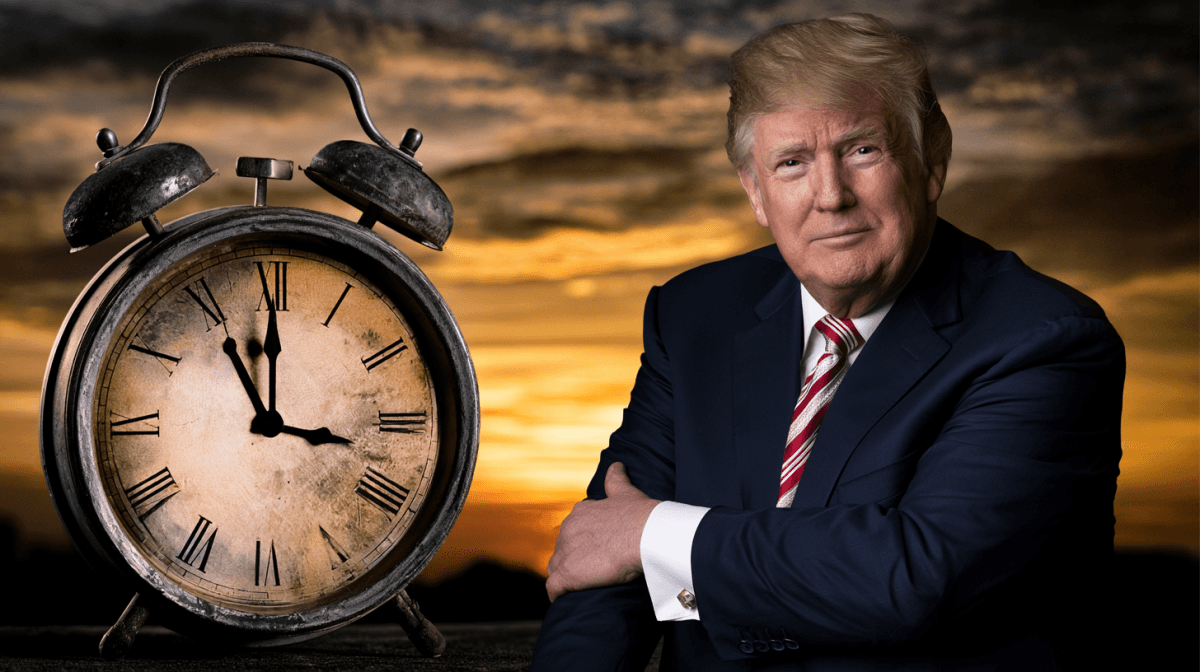
President Donald Trump has thrown his support behind a legislative push to make Daylight Saving Time (DST) permanent across the United States, following a significant step forward for the proposal in the House of Representatives. This week, the House Energy and Commerce Committee voted 48-1 to advance the Motor Vehicle Modernization Act, a broader legislative package that includes the Sunshine Protection Act, which would eliminate seasonal clock changes and establish year-round DST if enacted.
"This is so important in that Hundreds of Millions of Dollars are spent every year by people, Cities, and States, being forced to change their Clocks. Many of these Clocks are located in Towers, and the cost of renting, or using, Heavy Equipment to do this twice a year is prohibitive!" — President Donald Trump, Truth Social
The move comes as public sentiment increasingly favors an end to the twice-yearly clock adjustments. An October 2025 AP-NORC survey indicated widespread opposition among Americans to changing clocks biannually, with only a small fraction supporting the current system. Separate polling by YouGov further reinforced this trend, showing roughly two-thirds of Americans favor discontinuing the clock changes entirely. While there is strong support for ending the practice, public opinion remains divided on whether permanent Daylight Saving Time or permanent standard time should be adopted, though more voters lean towards permanent DST despite concerns over darker winter mornings.
President Trump endorsed the committee's action on Thursday, articulating his belief that the existing system imposes unnecessary financial burdens. "This is so important in that Hundreds of Millions of Dollars are spent every year by people, Cities, and States, being forced to change their Clocks," President Trump stated on Truth Social. He elaborated on the logistical and financial strain, adding, "Many of these Clocks are located in Towers, and the cost of renting, or using, Heavy Equipment to do this twice a year is prohibitive!" President Trump further committed to advocating for the legislation as it progresses through Congress, emphasizing a desire for an end to the "ridiculous, twice yearly production" and promoting the "far more popular alternative, Saving Daylight, which gives you a longer, brighter Day."
The Sunshine Protection Act, sponsored in the House by Rep. Vern Buchanan (R-FL) and in the Senate by Sen. Rick Scott (R-FL), seeks to modernize a system that many Americans perceive as obsolete. Rep. Buchanan noted, "My Sunshine Protection Act will bring us one step closer to ending the outdated and unpopular practice of changing our clocks twice a year. Floridians and Americans across the country are tired of the biannual time change." He has also cited studies suggesting that permanent Daylight Saving Time could yield benefits in areas such as traffic safety, public health, crime reduction, and increased opportunities for outdoor activities.
Currently, federal law grants states limited autonomy over time observance. Hawaii and the majority of Arizona already maintain standard time year-round. However, states are prohibited from independently adopting permanent Daylight Saving Time without federal approval. According to the National Conference of State Legislatures, 19 states have already passed measures indicating their readiness to implement year-round DST should federal law permit it.
The national debate surrounding time changes has a long history. The United States previously experimented with year-round Daylight Saving Time during World War II and again during the 1970s energy crisis. The latter instance was ultimately reversed due to public criticism, particularly concerning darker winter mornings and safety issues for children traveling to school. Today, some health researchers continue to advocate for permanent standard time, arguing it may offer superior advantages for sleep patterns and long-term health outcomes compared to permanent Daylight Saving Time.
Despite previous congressional efforts failing to reach fruition—such as a 2022 Senate-approved bill that stalled in the House—supporters of the Sunshine Protection Act believe the widespread public dissatisfaction with biannual clock changes could provide the necessary momentum for this latest proposal. For the Sunshine Protection Act to become law, it must successfully navigate both chambers of Congress and receive President Trump's signature.

