


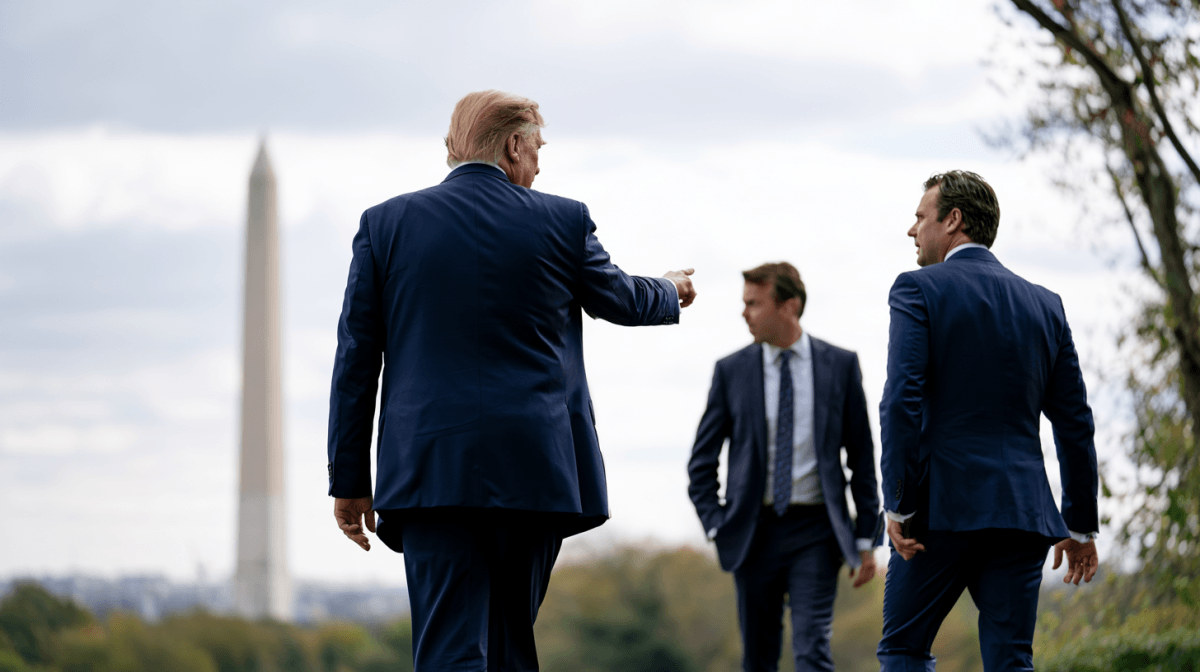
President Donald Trump announced Friday his administration's plan to establish the National Garden of American Heroes in Washington D.C., designating West Potomac Park along the Potomac River as its future site. This initiative is presented as a key component of the country's broader commemoration of its 250th anniversary in 2026.
"The people of America (and the World!) will come here to learn and be inspired by the ‘Greats’." — President Donald Trump, Truth Social post.
The announcement, made by President Trump via a post on Truth Social, detailed the monument garden as a large outdoor collection of statues. These statues are intended to honor a diverse array of prominent figures from throughout American history, spanning fields such as politics, sports, religion, entertainment, and civil rights. President Trump stated, "I am proud to announce the site of the NATIONAL GARDEN OF AMERICAN HEROES."
Describing West Potomac Park, President Trump characterized its current state as underdeveloped. He outlined plans to transform the area into "one of the World’s most beautiful public spaces," which would involve significant redesign efforts including new landscaping, additional monuments, and expanded public attractions. President Trump noted, "Right now, it is a totally BARREN field of Prime Waterfront Real Estate along our Mighty Potomac River." He envisions the completed project as a "World Class Masterpiece" designed to draw visitors from across the United States and internationally. The President emphasized the educational and inspirational purpose of the garden, stating, "The people of America (and the World!) will come here to learn and be inspired by the ‘Greats’." The collection of statues, he added, would feature "Founding Fathers, Military Warriors, Religious Leaders, Civil Rights Champions, World Class Athletes, Artists, Entertainers, and MORE."
The concept of a National Garden of American Heroes was initially introduced during President Trump's earlier presidency but was not completed at that time. The current announcement appears to significantly expand upon the original proposal, integrating it more directly with the administration's broader vision for redesigning federal spaces within Washington D.C.
Beyond the National Garden, the administration has recently proposed several other large-scale projects for the nation's capital. These include a major renovation of the reflecting pool situated near the Lincoln Memorial. President Trump has also discussed the construction of a substantial "Independence Arch" near Arlington National Cemetery. According to previous White House statements, this proposed arch would stand approximately 250 feet tall, symbolizing America’s 250th anniversary. White House Press Secretary Karoline Leavitt previously commented that this structure would exceed the height of any existing building in Washington. The proposed arch, as reported by The Associated Press, would be located within a major traffic circle connecting Washington to northern Virginia, between the Lincoln Memorial and Arlington National Cemetery.
Such a monumental undertaking, like the Independence Arch, would necessitate approvals from both Congress and the National Capital Planning Commission before construction could commence. The administration has indicated that some of these ambitious projects, potentially including the Independence Arch, might seek private funding to supplement or replace taxpayer funding.
Additionally, President Trump has announced plans for further renovations to the White House itself, including the construction of a new ballroom. These proposed changes are part of a broader initiative to update and enhance federal spaces throughout Washington D.C., as noted by Conservative Brief. These multiple projects collectively reflect a comprehensive effort by the Trump administration to leave a lasting mark on the nation's capital, coinciding with a significant national historical milestone. The scope and funding mechanisms for these proposals are expected to be subjects of ongoing public and legislative discussion.

