


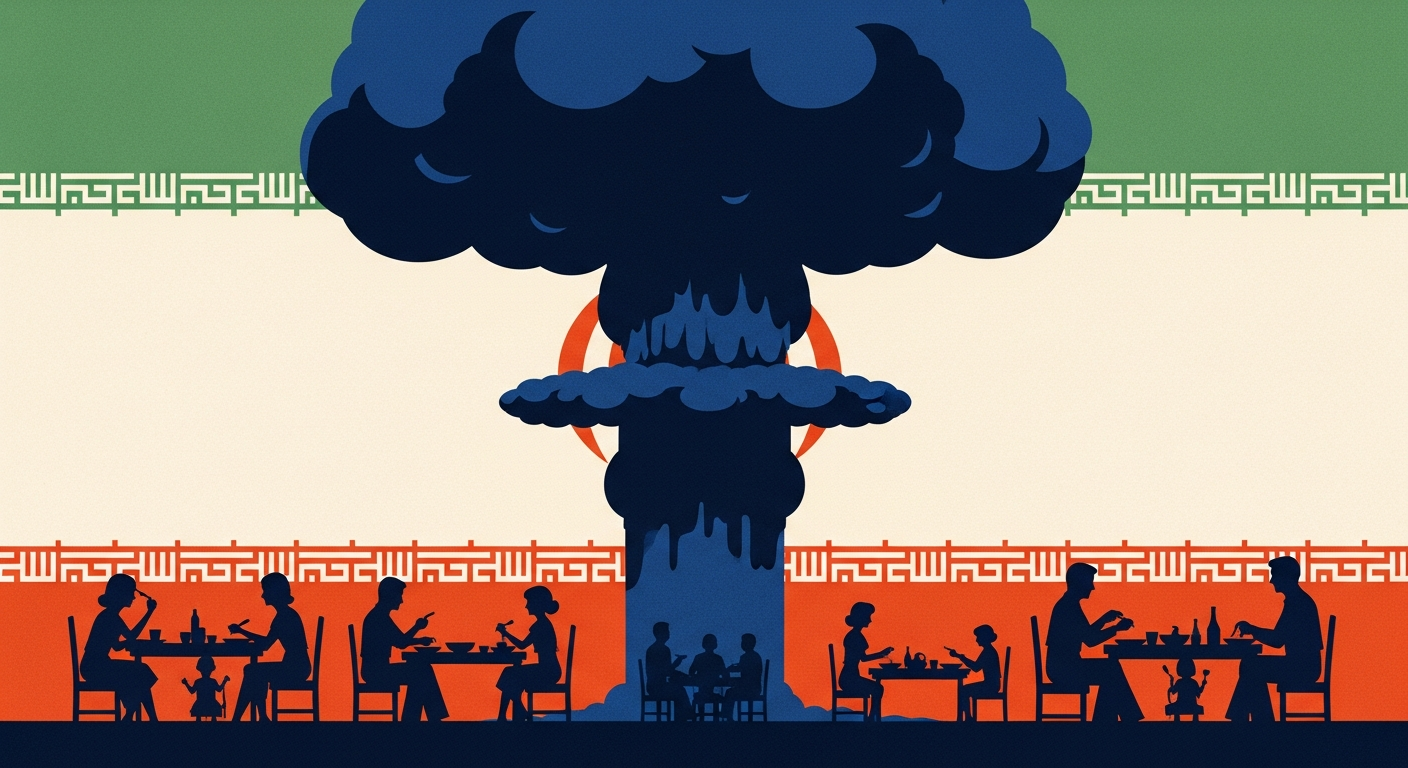
President Donald Trump on Friday reiterated and defended his controversial comments suggesting he was not primarily focused on Americans' financial struggles while the administration prioritizes efforts to prevent Iran from obtaining a nuclear weapon. Speaking during an interview with Bret Baier broadcast on Fox News, President Trump maintained that national security concerns regarding Iran's nuclear ambitions supersede temporary economic hardships faced by U.S. citizens.
"I don’t think about anybody. I think about one thing — we cannot let Iran have a nuclear weapon. That’s all." — President Donald Trump
The initial remarks that sparked widespread debate were made earlier this week on Tuesday. When asked whether he considered Americans struggling financially due to the ongoing conflict involving Iran, President Trump stated, "I don’t think about anybody. I think about one thing — we cannot let Iran have a nuclear weapon. That’s all." This statement quickly drew criticism from political opponents and some analysts, who argued that an administration should balance economic consequences with national security imperatives.
During the Friday interview, President Trump was confronted with the backlash his earlier comments had generated. He remained steadfast in his position, asserting, "That’s a perfect statement, I’d make it again." President Trump contended that critics and media outlets had selectively highlighted his remarks, removing them from the broader context of his explanation. He insisted that he still cared about the economic situation affecting Americans, but framed the current challenges as a transient phase. "It’s gonna be short-term pain," President Trump said, addressing concerns about inflation and higher energy prices that have been linked to the conflict in the Middle East. He added, "But the pain is much less than people thought."
The White House promptly echoed President Trump's stance following the initial controversy. White House Communications Director Steven Cheung issued a statement defending the administration's position, emphasizing that President Trump's "ultimate responsibility is the safety and security of Americans." Cheung underscored the administration's firm resolve, stating, "Iran cannot have a nuclear weapon," as he elaborated on the administration's actions and broader strategic approach in the region.
These remarks come at a sensitive time, as Republicans are increasingly concerned that the economic repercussions of the Iran conflict could negatively impact the party's political standing ahead of the 2026 midterm elections. The instability in the Middle East has contributed to rising oil prices, which in turn have pushed gasoline prices higher across the United States. These increases have fueled renewed inflation concerns, adding to the scrutiny over the administration's economic management. Government data released earlier this week indicated that consumer inflation in April recorded its largest increase in three years, intensifying public and political debate on the matter.
President Trump acknowledged that the conflict with Iran has had a discernible negative effect on various economic indicators. According to reports, including one from the Daily Mail, he had previously warned his advisors that the military confrontation could temporarily disrupt the nation's economic progress. Describing conversations with his aides about the impact of the conflict on inflation and energy prices, President Trump recalled telling them, "I hate to do this to you, but I’m going to screw up your numbers for a little while."
Furthermore, President Trump suggested during the Fox News interview that the ultimate outcome of the Iran conflict could exert a more significant influence on the upcoming midterm elections than traditional domestic issues such as redistricting or economic messaging. He articulated this perspective by saying, "I think a bigger difference would be if I win quickly," implying a swift resolution to the conflict could bolster his party's electoral prospects.
U.S. intelligence assessments cited in various reports indicate that analysts continue to believe Iran would require between nine months and one year to develop a nuclear weapon capability. This estimate remains consistent with projections made last summer, highlighting the persistent nature of the threat that President Trump has cited as his primary focus. The administration maintains that preventing nuclear proliferation in the region is a critical national security objective that warrants decisive action, even if it entails temporary economic discomfort for the American populace.

