


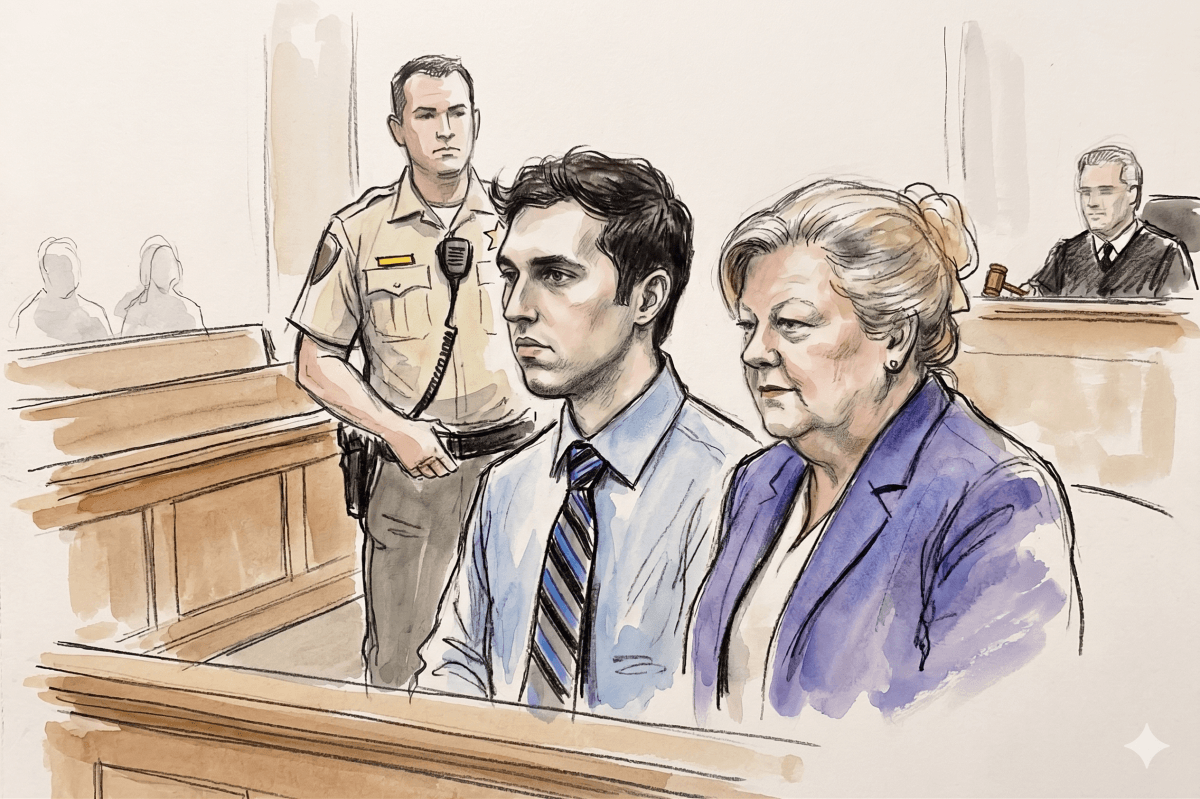
In a Utah courtroom on Tuesday, a procedural legal battle unfolded concerning public access to the upcoming preliminary hearing for Tyler Robinson, who faces charges in connection with the death of Turning Point USA founder Charlie Kirk. The dispute saw defense attorneys argue for closed proceedings to protect their client's right to a fair trial, while state prosecutors advocated for transparency to build public trust in the judicial system. Judge Tony Graf presided over the arguments but did not issue an immediate ruling.
"Our solution, what we see, is closing the preliminary hearing, and thereafter providing a transcript of what occurred during the preliminary hearing that can account for all of the evidence that wouldn’t be admissible at trial." — Staci Visser, Defense Attorney
Charlie Kirk, a prominent figure known for establishing Turning Point USA, was reportedly killed, leading to the arrest and charges against Tyler Robinson. The case has drawn national attention due to Kirk's public profile and the organization he founded. Preliminary hearings are a critical stage in the legal process, designed to determine if there is sufficient evidence to proceed to a full trial. The question of public access to these hearings often pits the principles of transparency against a defendant's right to an impartial jury, particularly in high-profile cases where media scrutiny is intense.
Defense attorney Staci Visser, representing Robinson, urged Judge Graf to seal the preliminary hearing entirely. Visser proposed that a written transcript of the proceedings could be released at a later date for public review. "Our solution, what we see, is closing the preliminary hearing, and thereafter providing a transcript of what occurred during the preliminary hearing that can account for all of the evidence that wouldn’t be admissible at trial," Visser stated. She emphasized that this approach was, in her view, "the only way we see that we can protect our client’s right to a fair trial and avoid evidence getting out that potentially is going to be challenged in the future and may not ultimately be used or admissible at trial." Visser also raised concerns about potential media "misinformation" that an open hearing could generate, arguing that controlling what information left the courtroom in real time was the only effective remedy to ensure her client received a fair trial.
Judge Graf appeared unconvinced by the defense's broad proposal to seal the entire hearing. He questioned whether sealing the entire proceeding and releasing a transcript later met the legal standard of being "narrowly tailored," asking Visser if she agreed her proposal was "a bit broad." The judge also inquired whether such a measure aligned with existing case law. Visser conceded that an alternative path existed, wherein the defense could raise objections in real time as the hearing progressed. However, she warned that this approach would "probably take quite a bit of time and extend the proceedings significantly," potentially prolonging the legal process.
State attorneys adopted a contrasting position, stressing the importance of public proceedings in fostering confidence in the justice system. One prosecutor told the court that "opening these proceedings creates confidence in the system." The prosecution indicated no intention of presenting evidence that would necessitate closing any portion of the hearing. Their only specific request was a narrow one: to prevent the public and press from physically handling or duplicating exhibits admitted into the record, a point on which Visser acknowledged the two sides were largely in agreement, stating, "the state and the defense are mostly on the same page about the exhibits."
Prosecutors also offered the court a detailed preview of what to expect at the July hearing. They anticipate five law enforcement officers will testify, covering personal observations, information relayed from other officers, and laying the groundwork for admitting physical and video evidence. Among the expected exhibits is a recorded video statement from Lance Twiggs, described in court as Robinson's "transgender lover." Additionally, the state disclosed two videos filmed by bystanders at Utah Valley University on the day Kirk was killed. These videos were described as "sensitive," and the state attorney suggested that if played during an open hearing, monitors could simply be rotated away from the gallery, negating the need to clear the courtroom.
Beyond the exhibits, Visser expressed deeper concerns regarding the nature of the officers' expected testimony. She told the court that "most of the preliminary hearing, as far as we can tell, is going to be based off of reliable hearsay," and that the defense lacked a reliable method to ascertain in advance which parts of the officer testimony would stem from personal knowledge versus secondhand information from other investigators. She characterized the anticipated investigation summary as "very extensive." The defense also submitted a categorized table of documents it believes fall under judicial rules governing private, protected, and safeguarded records, requesting the court ensure their proper treatment.
Judge Graf concluded the arguments without issuing a definitive ruling on the request to close the preliminary hearing. The July preliminary hearing date remains set. The legal debate highlights the ongoing tension between a defendant's right to a fair trial, free from undue influence or premature public judgment, and the public's right to transparency in judicial proceedings, particularly in cases of significant public interest involving prominent individuals. The court's eventual decision will set the precedent for public access to a crucial stage in this high-profile case.

