


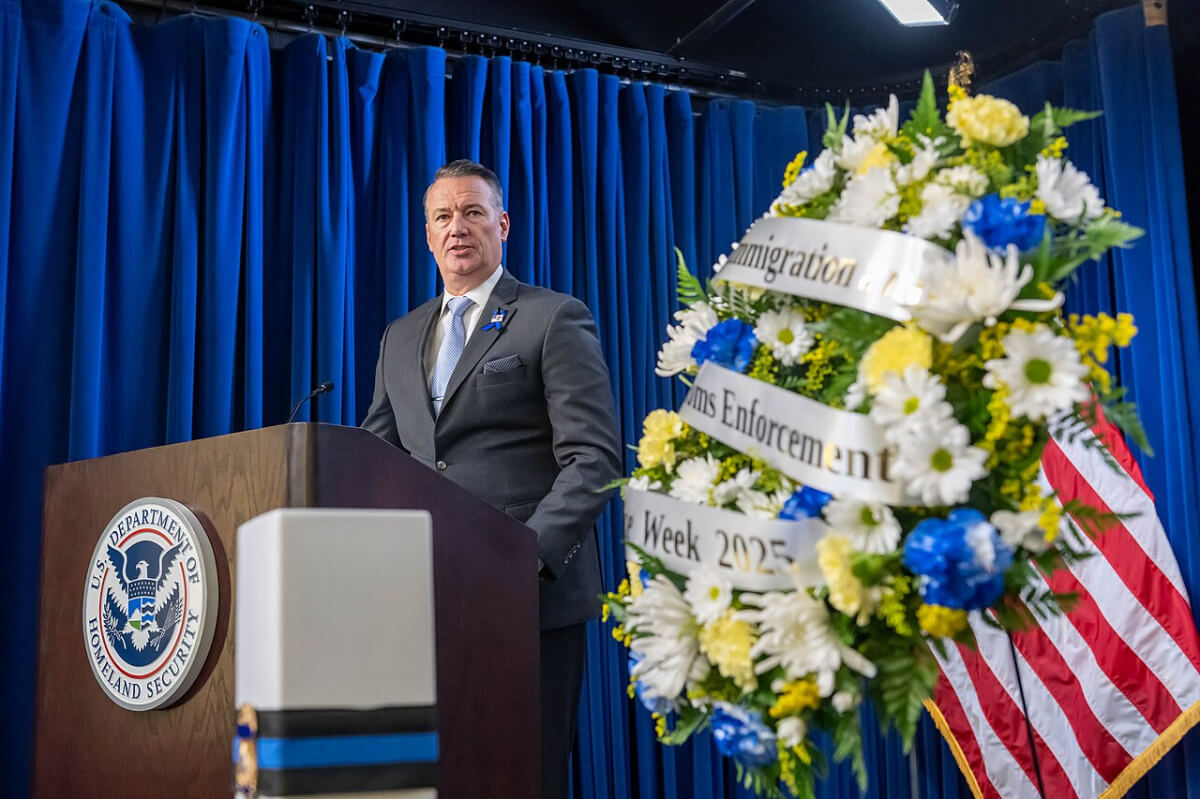
Todd Lyons, the acting head of U.S. Immigration and Customs Enforcement (ICE), will resign from his position at the end of May, signaling a significant leadership transition within one of the Trump administration’s most scrutinized agencies. The Department of Homeland Security (DHS) confirmed Lyons' impending departure, though officials did not immediately provide a detailed explanation for the move.
"Director Lyons has been a great leader of ICE." — Markwayne Mullin, Homeland Security Secretary
Lyons has been a prominent figure in the administration's robust immigration enforcement efforts, having overseen President Donald Trump's aggressive deportation agenda. His tenure saw ICE conduct large-scale arrests, workplace raids, and extensive deportation operations, aligning with President Trump's campaign pledge for a historic removal initiative. Federal data cited in various reports indicates that ICE deported approximately 442,000 individuals during fiscal year 2025, a figure among the highest recorded in recent memory.
Homeland Security Secretary Markwayne Mullin issued a statement praising Lyons' service and leadership. "Director Lyons has been a great leader of ICE," Mullin stated, adding that the department wishes him well in his future endeavors within the private sector.
Throughout his time leading ICE, Lyons actively defended several controversial tactics employed by the agency. He publicly supported the continued use of face coverings by ICE agents during certain operations, asserting that such measures were essential for protecting officers and their families from threats and harassment. Furthermore, he acknowledged that ICE was collaborating with other federal agencies to access various data systems, a strategy aimed at locating individuals targeted for deportation. These statements and practices drew considerable criticism from immigration advocates and civil liberties organizations, who raised concerns about privacy and due process. Conversely, Lyons garnered strong support from proponents of stricter border enforcement, who viewed him as a steadfast implementer of President Trump’s immigration policies.
Lyons' resignation unfolds during a particularly sensitive political period for immigration policy. The Trump administration is currently navigating numerous lawsuits, widespread public protests, and intensified scrutiny concerning its enforcement tactics, the conditions within detention facilities, and the extent of cooperation between federal and local authorities. Recent confrontations involving ICE operations in multiple cities have further amplified the national debate surrounding immigration policy and enforcement practices.
As of now, no successor has been formally announced to take over the leadership of ICE. This means the White House and DHS must now identify and select a new director to guide the agency through the next phase of the administration’s enforcement campaign. The individual chosen to replace Lyons will inherit an agency that remains at the epicenter of one of the most divisive issues in American politics. The incoming director will likely face considerable pressure from both sides of the political spectrum: those advocating for even stronger enforcement measures and those demanding significant reforms or limitations on the agency's powers.
The move by Lyons to the private sector also prompts questions about potential broader personnel changes within DHS. Leadership transitions often precede or coincide with shifts in strategic direction, public messaging, or overall departmental priorities. For the immediate future, Lyons’ departure closes a significant chapter in the history of U.S. immigration enforcement. He played a pivotal role in leading ICE during one of the most aggressive periods of immigration enforcement in modern American history, and his exit occurs as the national discourse on immigration remains intensely contested.

