


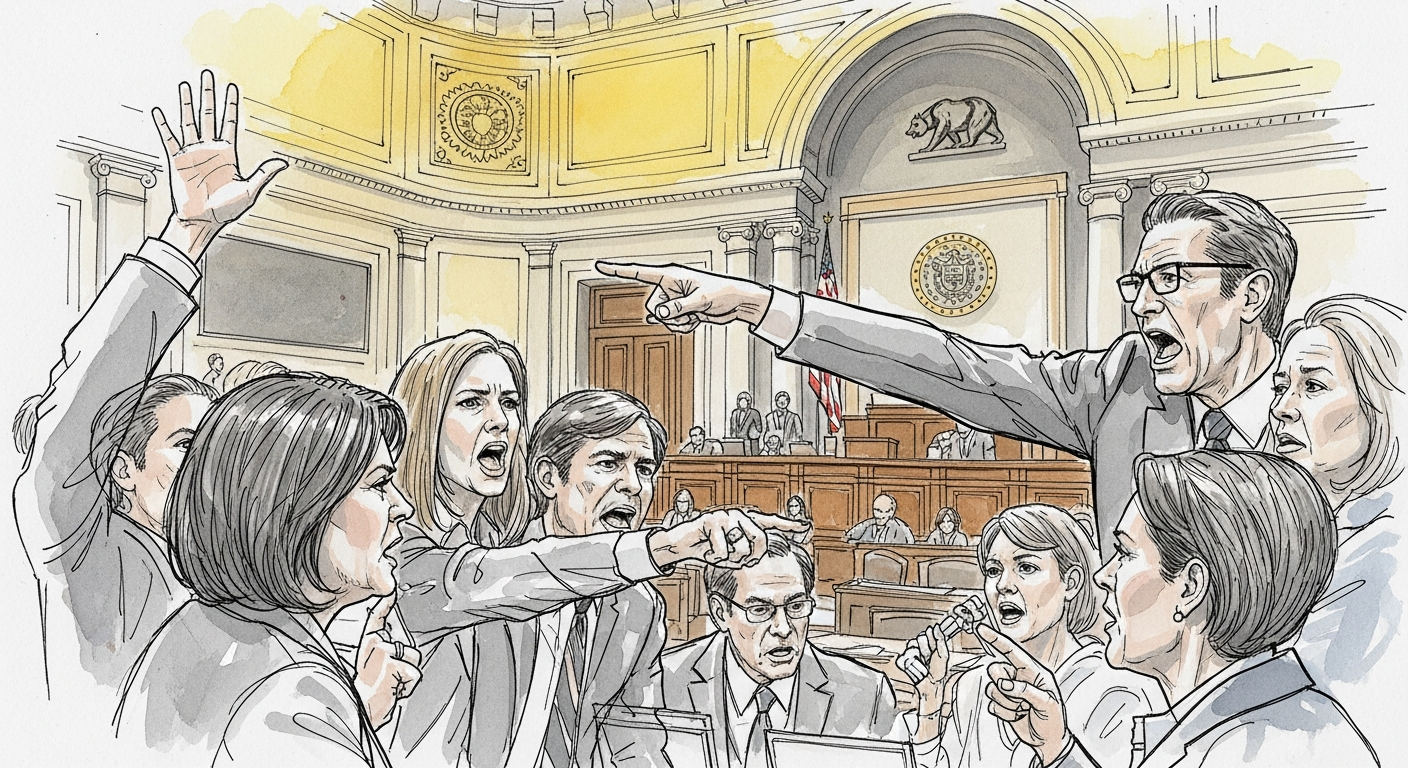
A proposed California state bill, Assembly Bill (AB) 2624, is currently under debate, drawing significant attention for its potential implications on free speech, journalistic practices, and public accountability. Introduced by Assemblymember Mia Bonta, the legislation seeks to provide legal protections for employees and volunteers at organizations receiving public funds, particularly those involved in immigration-related services, by allowing them to request restrictions on the release of identifying information online. However, the bill has encountered strong opposition from critics, including Republican Assemblymember Carl DeMaio and independent journalist Nick Shirley, who argue it could stifle investigative reporting and citizen oversight of taxpayer-funded entities.
"California is trying to pass a bill that could criminalize investigative journalism with misdemeanors, $10,000 fines, imprisonment, and content takedown." Nick Shirley, Independent Journalist
Assemblymember DeMaio, a Republican in the California State Assembly, has emerged as a vocal critic of AB 2624, which some opponents have dubbed the “Stop Nick Shirley Act.” DeMaio asserts that the bill's language is overly broad and could lead to increased legal risks for individuals recording and publishing material related to organizations that receive public funding. He contends that the measure raises serious First Amendment concerns, potentially discouraging watchdog journalists and citizens from documenting alleged misconduct or inefficiencies within publicly funded programs. During a recent Assembly committee hearing, DeMaio specifically questioned provisions that would empower organizations to demand the removal of online content and pursue penalties against those who refuse, arguing these mechanisms could be weaponized to suppress critical reporting on nonprofit groups and limit external scrutiny of public spending.
The bill's critics point to the work of independent journalist Nick Shirley as a key context for the legislation. Shirley has previously reported on organizations receiving public funding, particularly those linked to immigration services, and has alleged instances of fraud. He has publicly stated that the proposed bill was introduced after he "exposed mass fraud by immigrant groups in America." Shirley's concerns echo DeMaio's, with the journalist asserting on social media that California is attempting to pass a bill that "could criminalize investigative journalism with misdemeanors, $10,000 fines, imprisonment, and content takedown." He specifically mentioned that "Under AB 2624, government-funded entities like the Somali ‘Learing’ Daycare centers would be protected from being exposed if they operated inside California."
Supporters of AB 2624, including its author Assemblymember Bonta, argue the legislation is a necessary response to a perceived rise in harassment, doxxing, and targeted online exposure faced by employees and volunteers working in immigration support services. They maintain that individuals in these roles have been subjected to threats and the public dissemination of their personal information, creating unsafe working environments. The bill's proponents emphasize that its primary intent is to safeguard these workers, enabling designated organizations to request restrictions on the release of identifying information about their personnel when legitimate safety concerns are cited. They view the measure as a critical step in protecting vulnerable individuals who provide essential community services.
However, opponents counter that while worker safety is a valid concern, the bill’s provisions could be applied too broadly, potentially extending beyond genuine threats to encompass legitimate public interest reporting. They argue that the ability for organizations to request content removal and pursue penalties could be misused to challenge the publication of publicly available material, thereby shielding taxpayer-funded entities from transparency. DeMaio has stated his commitment to opposing the bill as it progresses through the legislature, characterizing it as an overreach that could undermine established press freedom protections in California. He suggests that lawmakers should instead prioritize addressing allegations of fraud within taxpayer-funded programs rather than enacting measures that could restrict reporting on such issues.
The ongoing debate surrounding AB 2624 highlights a broader conflict between competing values: the need to protect individuals from harassment and ensure their safety, versus the public's right to information and the role of a free press and citizen journalists in holding publicly funded organizations accountable. As the bill navigates the legislative process, its ultimate form and impact remain subjects of intense discussion and scrutiny, with implications for how public funds are overseen and how information is disseminated in the digital age. The outcome in California could set a precedent for similar legislation in other states, shaping the future of investigative reporting on government-funded entities.

