

Breaking
Sponsor Advertisement
CT Passes Bottle ID Bill Amid Voter ID Consistency Debate
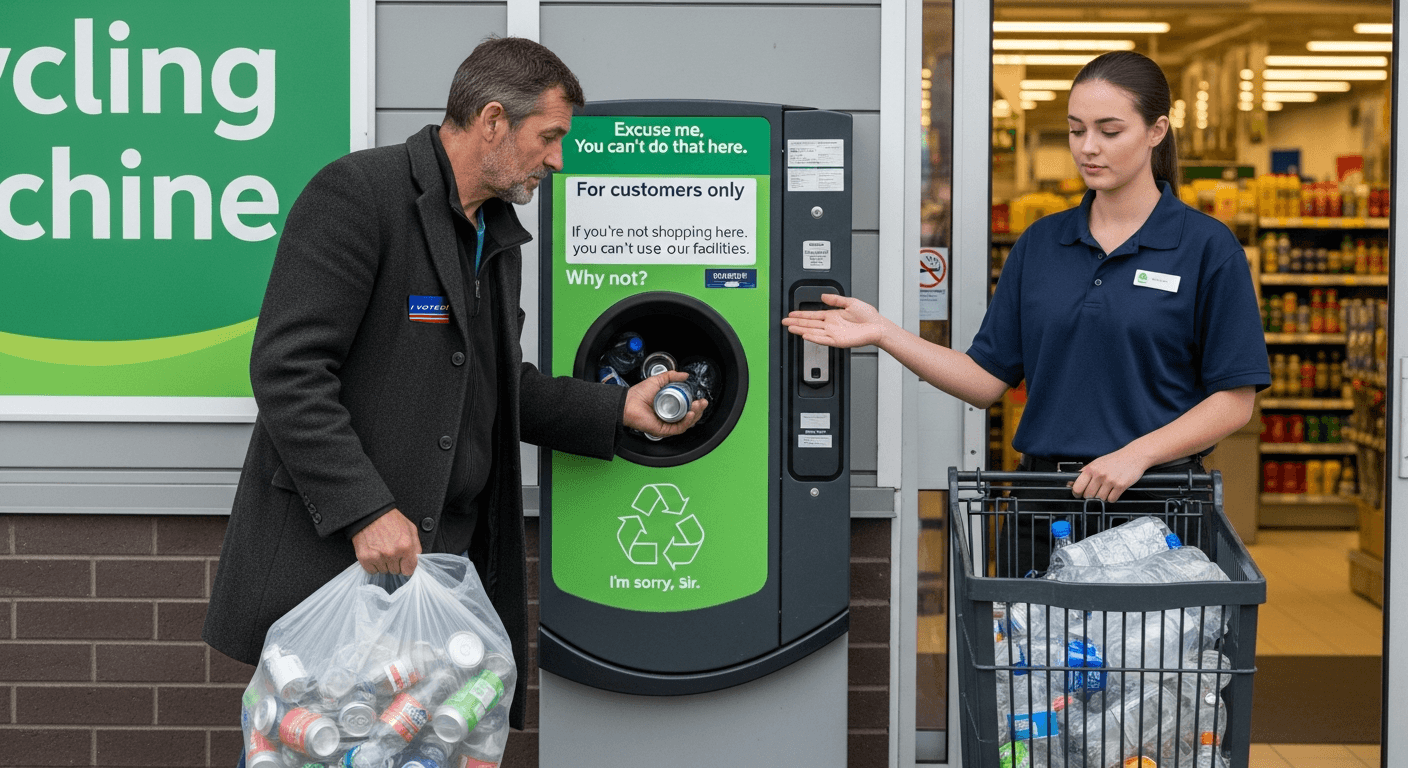
AI-generated image for: CT Passes Bottle ID Bill Amid Voter ID Consistency Debate

CT Passes Bottle ID Bill Amid Voter ID Consistency Debate

Connecticut lawmakers have approved a new measure requiring identification for high-volume bottle returns, a policy shift sparking discussion about fraud prevention standards compared to the state's existing voter identification rules.
Jump to The Flipside Perspectives

Connecticut lawmakers have passed Senate Bill 299, a new enforcement measure mandating identification for certain high-volume bottle and can redemption transactions. The legislation, approved by the state assembly, requires redemption centers to record information from individuals attempting to return more than 1,000 containers in a single day. This policy adjustment is drawing significant attention for its implications regarding fraud prevention and how identification standards are applied across different state systems, particularly in contrast to Connecticut’s voter identification protocols.

"In Connecticut, you have to show ID to recycle more than 1,000 bottles in one day But not to cast a vote for the next leader of the free world" — Mike Lee, Senator (R-UT)

The bill represents a broader effort to address what lawmakers describe as vulnerabilities within the state's bottle deposit program. Supporters of the measure argue these changes are essential to combat increasing reports of large-scale redemption activities, including suspected returns of containers originating from out of state. The urgency of the issue has been amplified by Connecticut's decision to raise its bottle deposit to 10 cents in 2024. While this increase significantly boosted redemption rates, officials also note it created enhanced financial incentives for bulk collection and transport of containers, making the system more susceptible to exploitation.

Beverage distributors have underscored the financial impact of these vulnerabilities, reporting substantial losses. Industry data indicates that distributors are paying out considerably more in redemption claims than they collect in deposits, with estimated annual losses exceeding $11 million in a single year. Wholesalers contend that this imbalance points to unusually high return volumes that the existing system was not designed to handle. Regulators have expressed that enforcement efforts have been complicated by a lack of effective tracking mechanisms. Without standardized labeling or identifiers tied to where containers were originally sold, officials, as reported by the CT Mirror, currently lack a reliable method to differentiate in-state recycling from containers brought in from other jurisdictions.

Beyond the identification requirement, Senate Bill 299 introduces several other provisions designed to strengthen program integrity. These include stricter licensing requirements for redemption centers, increased penalties for repeat violations, and expanded oversight of bulk transactions. Lawmakers maintain that these steps are intended to improve accountability within the system while ensuring that access remains convenient for typical consumers engaging in routine recycling.

However, the identification requirement has ignited a broader political discussion. Critics of the measure have highlighted what they perceive as a stark contrast between the more stringent verification rules now applied to recycling transactions and Connecticut’s comparatively flexible voter identification standards. In Connecticut, non-photo forms of identification may be accepted in certain situations when casting a ballot. Critics argue this discrepancy raises fundamental questions about the consistent application of fraud prevention standards across various areas of state policy. For instance, Senator Mike Lee shared a tweet stating, "In Connecticut, you have to show ID to recycle more than 1,000 bottles in one day But not to cast a vote for the next leader of the free world."

Conversely, supporters of the legislation contend that the two systems—bottle redemption and voter registration—are fundamentally different in their purpose and design, thus justifying different identification requirements. Despite the debate surrounding consistency, the legislation garnered bipartisan support. Democratic lawmakers largely backed the measure, framing it as a necessary step to address demonstrable vulnerabilities in the redemption system. Republican lawmakers also supported the bill, describing it as a direct response to what they view as the predictable exploitation of a high-value deposit program. Officials from both political spectrums have acknowledged the inherent difficulty of accurately tracking container origin without advanced systems like standardized labeling or barcode technology.

Connecticut Governor Ned Lamont (D) is expected to review the bill in the coming weeks. State officials have indicated that additional reforms are under consideration as longer-term solutions, including the implementation of improved tracking technology and potential new labeling requirements for containers. As the bill progresses, the discussion has broadened beyond the specifics of recycling policy to encompass wider considerations of regulatory consistency, comprehensive fraud prevention strategies, and how states navigate the balance between ensuring accessibility and maintaining robust oversight across diverse public systems.

Advertisement

The Flipside: Different Perspectives

Progressive View

While addressing fraud in the bottle redemption program is a legitimate concern, the implementation of identification requirements for high-volume returns raises questions about equity and accessibility. Progressive values emphasize ensuring that public systems remain accessible to all, especially those who rely on them. For some low-income individuals or families, collecting and returning bottles can be a significant source of supplementary income. Introducing an ID requirement, even for high volumes, could create an unnecessary barrier, potentially disproportionately affecting vulnerable populations who may lack consistent access to state-issued identification or face other systemic hurdles.

The debate also compels a critical examination of how "fraud" is defined and prioritized across different state functions. Critics' comparisons to Connecticut’s more flexible voter identification standards highlight a potential inconsistency: is the state more concerned with the financial loss of beverage distributors than with ensuring broad, equitable access to democratic participation? While fraud prevention is important, a progressive approach would seek solutions that are both effective and inclusive, perhaps focusing more on technological solutions like standardized labeling rather than measures that could inadvertently disadvantage certain community members. The goal should be collective well-being, which includes both program integrity and ensuring that all residents can easily participate in and benefit from public services without undue burden.

Conservative View

The passage of Connecticut’s Senate Bill 299, requiring identification for high-volume bottle returns, represents a critical step towards fiscal responsibility and program integrity. For too long, the state’s bottle deposit system has been vulnerable to exploitation, resulting in over $11 million in reported annual losses for beverage distributors. This is not merely a technical issue but a matter of preventing fraud and ensuring that programs operate as intended, protecting the financial interests of businesses and ultimately consumers. The 10-cent deposit, while intended to boost recycling, predictably created an incentive for individuals to collect and transport containers from out-of-state, draining resources from Connecticut’s system.

Requiring identification for large-scale returns is a common-sense measure to combat this type of organized fraud. It introduces accountability where there was none, aligning with the conservative principle that government programs, when they exist, must be managed efficiently and transparently. The debate over its consistency with voter ID laws highlights a perceived double standard where financial integrity is prioritized over the integrity of the electoral process. If the state can implement ID requirements to protect against recycling fraud, it raises questions about why similar, or even more robust, measures are not uniformly applied to safeguard the fundamental right to vote. This legislation is a practical response to a clear problem, emphasizing personal responsibility and the need for robust controls to prevent abuse of public systems.

Common Ground

Despite differing perspectives on the implementation of identification requirements, both conservative and progressive viewpoints share common ground regarding the underlying goals of the bottle redemption program. There is broad agreement on the necessity of maintaining program integrity and preventing large-scale fraud, particularly given the reported $11 million in annual losses. Neither side wishes to see the system exploited or financially undermined.

Furthermore, both sides acknowledge the practical difficulties in tracking the origin of containers without advanced technological solutions. This shared understanding could pave the way for bipartisan collaboration on future reforms. Investments in improved tracking technology, such as standardized labeling or barcode systems, represent a potential area of consensus. Such solutions could enhance accountability and reduce fraud effectively without necessarily imposing individual identification requirements, thereby balancing security needs with concerns about accessibility. By focusing on systemic improvements rather than solely on individual verification, Connecticut could develop a more robust and widely accepted framework for its bottle deposit program.

What's your view on this story? Share your thoughts and remember to consider multiple perspectives and being respectful when forming and voicing your opinion. "If you resort to personal attacks, you have already lost the debate..."

Advertisement

Contact Us About This Article

Have a question or comment about this article? We'd love to hear from you.

About Fair Side News

At Fair Side News, we believe in presenting news with perspectives from both sides of the political spectrum. Our goal is to help readers understand different viewpoints and find common ground on important issues.