


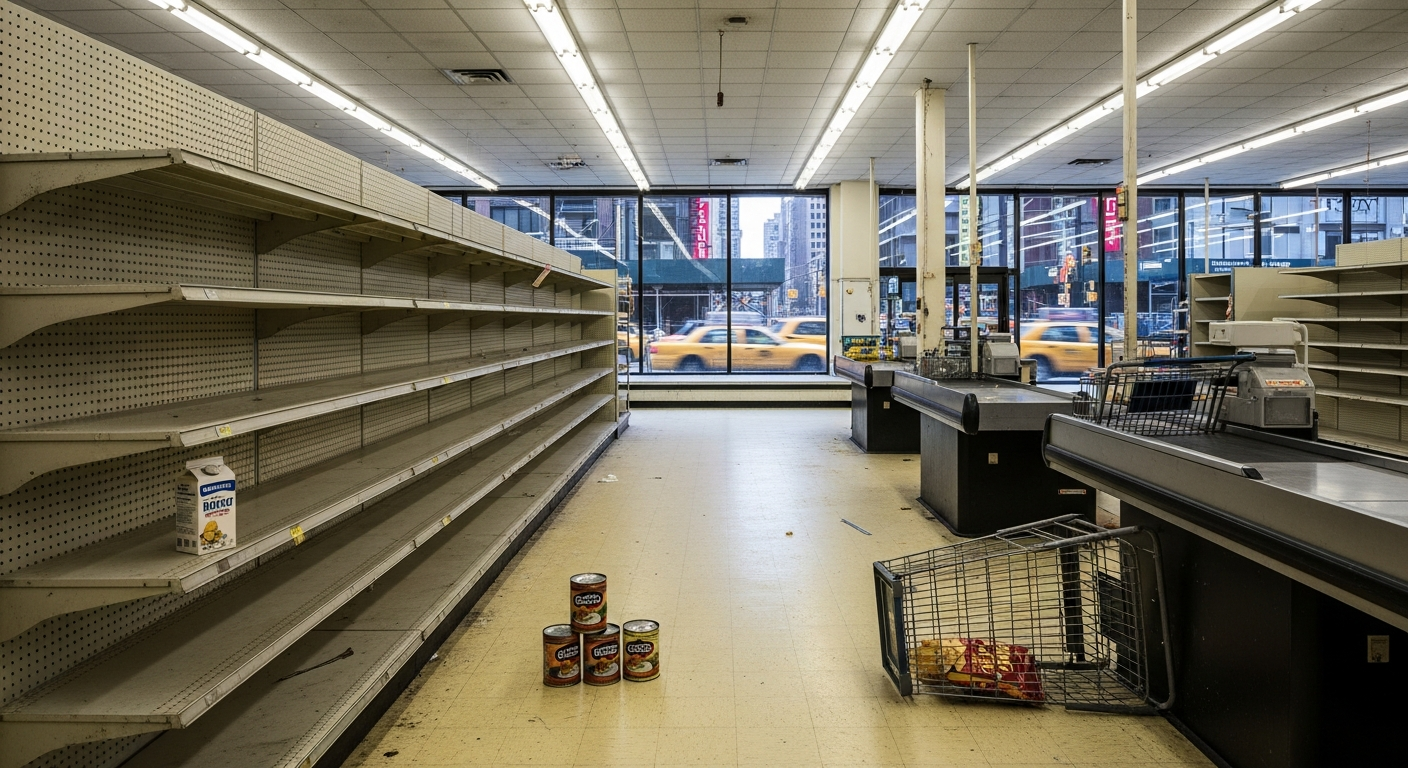
New York City Mayor Zohran Mamdani revealed a comprehensive plan on Tuesday to establish government-operated grocery stores across the city’s five boroughs. Speaking at Harlem’s La Marqueta, Mayor Mamdani detailed an initiative carrying a total price tag of $70 million, which hinges on City Council approval before any funds can be allocated. A central promise of the plan, lower prices, will apply only to a narrow selection of staple products, dubbed an "essential basket of goods," with other items to be sold at competitive, but not guaranteed, prices.
"When it comes to the products that we will be selling at the city-run grocery stores, there will be an essential basket of goods that will be guaranteed a cheaper price, and cheaper than what they’re being sold at currently." Zohran Mamdani, New York City Mayor
The mayor confirmed that "When it comes to the products that we will be selling at the city-run grocery stores, there will be an essential basket of goods that will be guaranteed a cheaper price, and cheaper than what they’re being sold at currently." Officials have yet to finalize the specific products included in this protected basket, though bread, milk, and eggs were mentioned as potential candidates. Jeanny Pak, interim president of the city’s Economic Development Corporation (EDC), further clarified that this core basket would consist of fresh, everyday grocery items, and any set discount rate would apply uniformly across all planned locations.
La Marqueta, a historic city-owned market space in Harlem, was designated as the first confirmed location for the network of stores. This site holds significant historical relevance, having been launched in 1936 by former Mayor Fiorello La Guardia as the Park Avenue Retail Market to bring pushcart vendors indoors and provide fresh food to working-class New Yorkers. Currently, La Marqueta serves as a community hub housing 20 small businesses. The Mamdani administration intends to construct a brand-new, 9,000-square-foot grocery store on a vacant lot adjacent to the existing market, a project estimated to cost $30 million.
This $30 million figure for the La Marqueta store has drawn immediate criticism from grocery industry insiders. They noted that a conventional 15,000-square-foot store, considerably larger than the city’s proposal, can typically be built for under $10 million, even without factoring in complexities like elevators or escalators. Adding to the scrutiny, two existing buildings with substantially more retail space are currently for sale just down the block from La Marqueta, listed at approximately $15 million and $7 million, respectively.
Mayor Mamdani addressed the timeline for the La Marqueta project, stating, "This store will be open in 2029," attributing the delayed opening to the decision to build from scratch rather than retrofitting an existing space. The $30 million allocated for the La Marqueta store represents nearly half of the administration’s total $70 million budget for the grocery initiative. The broader goal is to establish city-run stores in all five boroughs before Mayor Mamdani’s first term concludes, with the remaining locations anticipated to open earlier, and the first store projected to welcome customers in late 2027.
City Hall does not plan to operate these stores directly; instead, a private contractor will be enlisted to handle daily management. This detail introduces another layer of operational complexity to the taxpayer-funded venture. Deputy Mayor for Economic Justice Julie Su refrained from specifying which products the city intends to subsidize but broadly committed to stocking "things that families actually need every week." Su also pledged that each store's inventory would be tailored to reflect the tastes and needs of its surrounding neighborhood, stating, "And we will listen to the community, so the food on the shelves will reflect what people in this neighborhood eat."
The new grocery stores are designed to follow an open-access model, welcoming all New Yorkers irrespective of income or neighborhood. Mayor Mamdani framed the initiative as a direct response to the ongoing grocery price volatility that has strained household budgets across the city. He emphasized the benefit for residents, explaining, "What it’s going to allow people to do is it’s going to allow them to budget, and it’s going to allow it to feel the predictability of price." A tweet from @TheChiefNerd quoted Mamdani as saying, "Since the pandemic, grocery prices have gone up and they haven't come back down … When New Yorkers are being priced out of their groceries, government will step in and deliver affordability.”
The Economic Development Corporation already manages six public retail markets throughout the city, including La Marqueta, Arthur Avenue Market, Essex Market Gourmet Glatt, Jamaica Farmers Market, and Moore Street Market, showcasing an existing network of food and vendor spaces. However, the success of this new grocery store initiative, both in securing City Council funding and in delivering meaningful discounts to shoppers, remains to be seen.

