

Breaking
Sponsor Advertisement
Trump Forecasts Higher Gas Prices Amid Iran Conflict Escalation
AI-generated image for: Trump Forecasts Higher Gas Prices Amid Iran Conflict Escalation

Trump Forecasts Higher Gas Prices Amid Iran Conflict Escalation

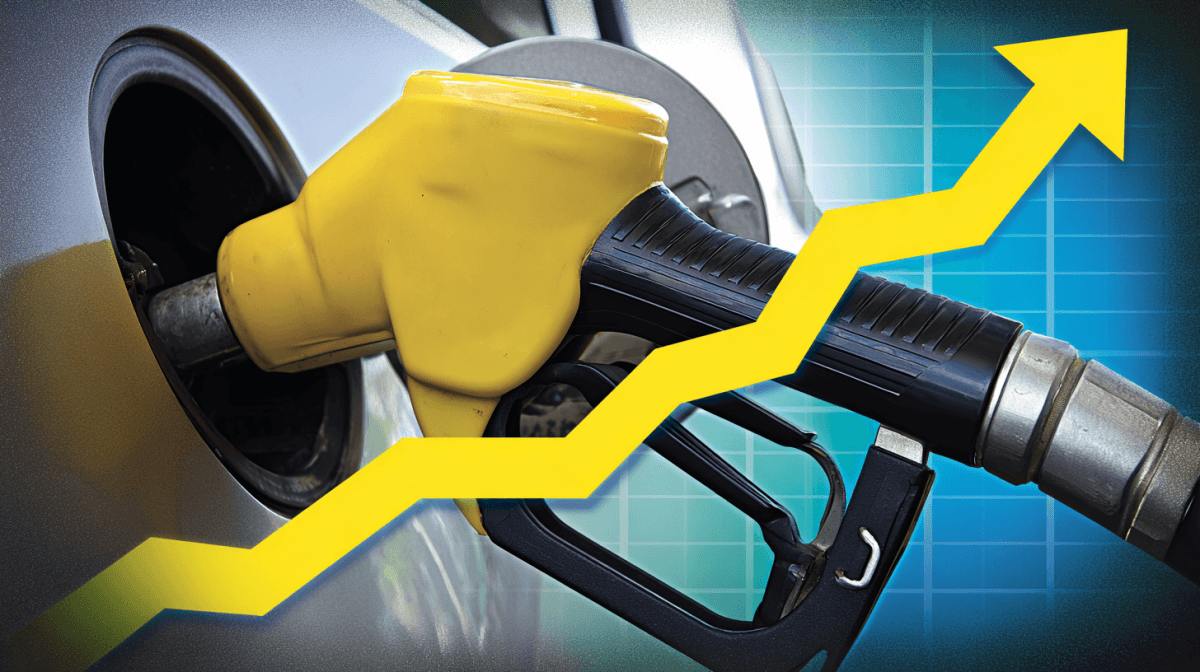
President Donald Trump predicted gasoline prices may remain steady or rise further, stating relief is not guaranteed before November, as the U.S. Navy initiated a blockade of the Strait of Hormuz following collapsed ceasefire talks with Iran.
Jump to The Flipside Perspectives

President Donald Trump indicated Sunday that American motorists should not expect a significant drop in gasoline prices before November, during an interview with Fox News anchor Maria Bartiromo on her program “Sunday Morning Futures.” His remarks, delivered amidst escalating tensions with Iran, suggested that pump prices could remain at current levels or even increase.

"It could be the same, or maybe a little bit higher." President Donald Trump

The average cost of a gallon of regular gasoline has seen a sharp increase recently, climbing from approximately $3.60 a month ago to about $4.13, according to data from the American Automobile Association (AAA). This surge has placed additional financial strain on households across the country, making President Trump’s forecast particularly impactful. When asked directly by Bartiromo about the outlook for fuel costs, President Trump stated, “It could be the same, or maybe a little bit higher.” This blunt assessment visibly surprised Bartiromo, whose reaction was noted during the broadcast.

The President attributed the primary driver of the current fuel spike to the Strait of Hormuz, a critical maritime chokepoint through which roughly one-fifth of the global oil supply passes. Iranian forces have maintained effective control over the waterway since the conflict began 45 days prior, contributing to a sustained upward trend in crude oil markets.

Sunday marked a significant escalation in the ongoing conflict. President Trump revealed that ceasefire negotiations between the United States and Iran had collapsed over the weekend. In response, he announced a decisive military action: the United States Navy would move to seal off the Strait of Hormuz entirely, effectively blocking all inbound and outbound vessel traffic. This blockade was implemented precisely as stated by President Trump, commencing Monday at 10 a.m. Eastern time.

Bartiromo pressed President Trump on the potential ramifications of this naval action on an already volatile global energy market. The President acknowledged the immediate impact, responding, “I think so. I think so.” He expressed a long-term optimism regarding energy prices, suggesting that while short-term turbulence was likely, prices would eventually decrease. “Eventually it’s going to be lower,” President Trump said, adding later, “It might not happen initially, but it’s going down.”

President Trump also provided a stark assessment of the damage inflicted upon Iran’s military capabilities during the conflict. He claimed that Iranian naval forces in the region had been decimated, leaving the country with minimal remaining military infrastructure of consequence. “We’ve wiped out their whole country, essentially,” President Trump declared. He further specified the vulnerability of Iran’s civilian infrastructure, noting, “The only thing left really is their water, their desalinization plants, their electric generating plants which are very easy to hit.” President Trump was direct about the potential consequences of targeting such facilities, stating, “We could have them all done-down. And I mean, down like you couldn’t have electricity for ten years because it takes you ten years to build those plants from scratch.” While making it clear that such options remain on the table, he also expressed reluctance to order such strikes.

The conversation also touched upon the broader landscape of American alliances. President Trump voiced strong dissatisfaction with NATO partners, criticizing their perceived lack of support during the conflict. “I’m very disappointed in NATO. They weren’t there for us. We pay trillions of dollars for NATO, and they weren’t there for us,” he told Bartiromo. He warned that Washington’s financial contributions to the alliance would be subject to “very serious examination.”

In attributing responsibility for the current geopolitical and economic challenges, President Trump laid blame squarely on his predecessor, describing Joe Biden as “grossly incompetent.” He asserted that decisions made during Biden’s tenure formed the basis of the country’s present entanglements. President Trump also reiterated his claims regarding the 2020 election, stating, “Look, the election was rigged. You know that? I know that. Everybody knows that now,” to which Bartiromo replied, “Yep.” He concluded this point by asserting, “And it’s all come out, and it’s coming out.”

As the 2026 midterm cycle begins to take shape, Republicans currently hold control of both chambers of Congress. President Trump’s approval numbers have reportedly seen a downward trend amid the financial pressures linked to the ongoing conflict, a factor that historically influences congressional election outcomes. The escalating situation in the Strait of Hormuz and its potential impact on global energy markets are expected to remain central issues in the public discourse.

Advertisement

The Flipside: Different Perspectives

Progressive View

Progressives would likely express significant concern regarding President Trump’s recent statements and actions, particularly the naval blockade of the Strait of Hormuz and his prediction of continued high gas prices. The immediate impact of rising fuel costs on working-class families and low-income communities would be a primary focus, highlighting issues of economic equity and the disproportionate burden placed on vulnerable populations. The potential for further escalation in the Middle East, with President Trump’s explicit mention of targeting Iranian infrastructure, raises alarms about humanitarian consequences, regional instability, and the risk of a broader conflict.

From a progressive standpoint, the unilateral blockade could be seen as a dangerous move that disregards international law and global diplomatic norms, potentially alienating allies and undermining collective security efforts. President Trump’s criticism of NATO and threats to re-evaluate U.S. participation would be viewed as weakening crucial alliances at a time when global cooperation is essential to address complex challenges. Furthermore, his repeated claims about a "rigged election" are deeply troubling, as they undermine democratic institutions, sow distrust in the electoral process, and can incite political polarization. Progressives would advocate for diplomatic solutions, international collaboration, and policies that prioritize the well-being of all citizens over aggressive military posturing, while also upholding democratic principles and the integrity of elections.

Conservative View

From a conservative perspective, President Trump’s decisive actions and blunt assessments reflect strong leadership aimed at securing American interests and projecting strength on the global stage. The blockade of the Strait of Hormuz, while potentially causing short-term economic turbulence, is framed as a necessary measure to counter Iranian aggression and restore stability to a critical shipping lane. This approach aligns with a "peace through strength" doctrine, prioritizing national security and deterring adversaries. Conservatives would argue that holding Iran accountable for its actions, particularly its control over the Strait, is paramount, even if it entails temporary economic discomfort.

Furthermore, President Trump’s criticism of NATO partners resonates with calls for allies to shoulder a greater share of defense burdens. The idea that the U.S. pays "trillions of dollars" for an alliance where members are "not there for us" highlights a long-standing conservative concern about equitable burden-sharing and the efficient use of taxpayer money. His emphasis on evaluating U.S. financial participation in NATO underscores a commitment to fiscal responsibility and strategic re-evaluation of international commitments. Finally, blaming the current entanglements on the "grossly incompetent" decisions of the previous administration aligns with a conservative narrative of holding past leadership accountable for perceived policy failures and advocating for a return to policies that prioritize American prosperity and sovereignty.

Common Ground

Despite differing approaches, there are areas of common ground regarding the issues raised by President Trump's statements. Both conservatives and progressives share a desire for stable and affordable energy markets, recognizing that high gas prices negatively impact all American households and the broader economy. There is also bipartisan agreement on the importance of protecting U.S. national security interests and ensuring the free flow of international commerce through vital waterways like the Strait of Hormuz. While methods may differ, the goal of preventing hostile actors from disrupting global trade and energy supplies is shared.

Furthermore, both sides generally agree that diplomatic solutions should be pursued where possible to de-escalate conflicts and avoid unnecessary military engagements. While conservatives may emphasize strength and deterrence, and progressives may prioritize negotiation and multilateralism, the ultimate objective of preventing large-scale war and protecting American lives is a shared value. Both viewpoints can also converge on the need for accountability in international relations, whether that means holding adversaries responsible for their actions or ensuring that allies contribute fairly to collective defense. Finally, there is a shared interest in a strong and prosperous America, even if there are different philosophies on how best to achieve that prosperity and secure its future.

What's your view on this story? Share your thoughts and remember to consider multiple perspectives and being respectful when forming and voicing your opinion. "If you resort to personal attacks, you have already lost the debate..."

Advertisement

Contact Us About This Article

Have a question or comment about this article? We'd love to hear from you.

About Fair Side News

At Fair Side News, we believe in presenting news with perspectives from both sides of the political spectrum. Our goal is to help readers understand different viewpoints and find common ground on important issues.