


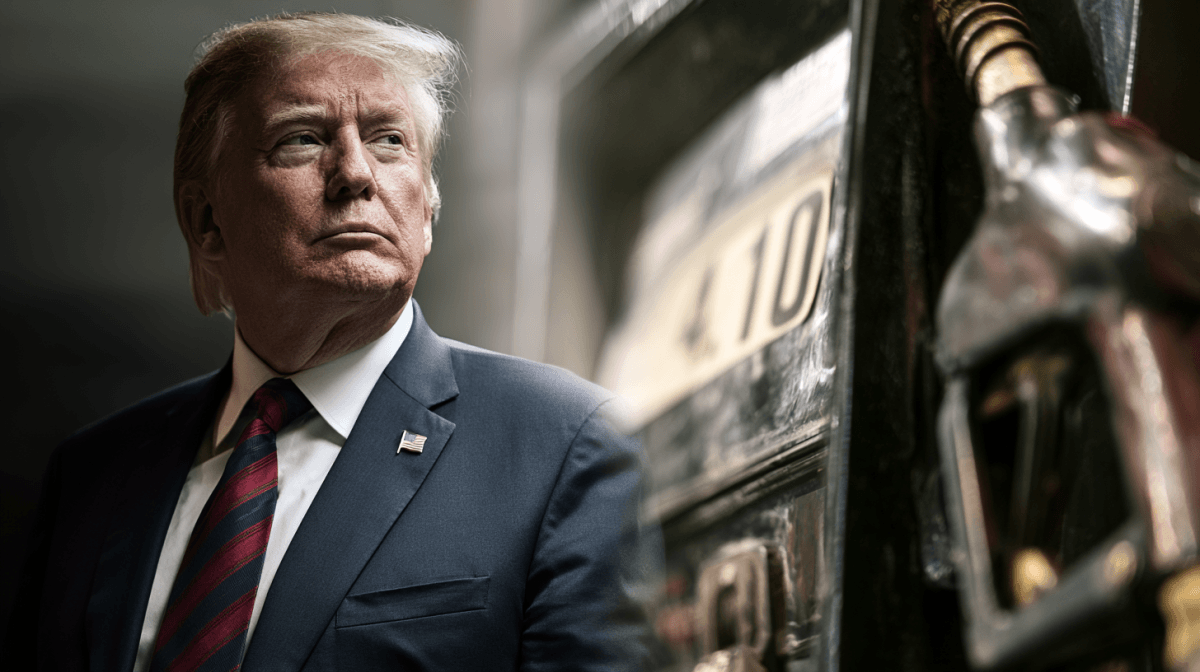
President Donald Trump has publicly advocated for a temporary suspension of the federal gasoline tax, a move aimed at providing relief to American consumers facing sharply rising fuel prices. The proposal, which would require legislative action from Congress, was first discussed during a phone interview with CBS News, where President Trump outlined it as a short-term measure to ease the economic burden on drivers. He specified that the tax would be reinstated once fuel costs stabilize.
"I think it’s a great idea. Yup, we’re going to take off the gas tax for a period of time, and when gas goes down, we’ll let it phase back in." — President Donald Trump, CBS News Interview
The suggestion comes as global oil markets react to increased instability linked to the Iran conflict, including heightened concerns over crucial shipping routes such as the Strait of Hormuz. This geopolitical tension has contributed to a significant surge in gasoline prices in recent weeks, with the national average for gasoline reaching approximately $4.52 per gallon.
The federal gas tax, currently set at 18.4 cents per gallon for gasoline and 24.4 cents per gallon for diesel, is a primary funding source for the Highway Trust Fund. This fund is vital for financing road construction, maintenance, and public transit projects across the United States. Any suspension of this tax would directly impact the revenue stream for these national infrastructure initiatives.
President Trump articulated his support for the idea, stating, "I think it’s a great idea. Yup, we’re going to take off the gas tax for a period of time, and when gas goes down, we’ll let it phase back in." While the President's announcement has garnered immediate political attention, the mechanism for implementation is complex. The federal gas tax is codified by statute, meaning that a suspension cannot be enacted solely through executive order and would necessitate congressional approval. This requirement has already prompted initial discussions and legislative maneuvering on Capitol Hill.
Several Republican lawmakers have quickly voiced their support for President Trump's proposal. Senator Josh Hawley (R-MO) has indicated his intention to introduce legislation to suspend the tax, and Representative Anna Paulina Luna (R-FL) plans to advance a corresponding bill in the House. Historically, Democrats have also explored similar relief measures during periods of high fuel costs. However, these past efforts have frequently encountered obstacles due to concerns over how to compensate for the significant loss of revenue that underpins federal infrastructure spending.
The fiscal implications of a federal gas tax suspension are substantial. Analysts estimate that such a measure could reduce federal revenue by approximately $500 million per week, equating to more than $2 billion per month. This projected revenue loss would place additional strain on the Highway Trust Fund, which has already faced funding challenges. Over time, advancements in vehicle fuel efficiency and the growing adoption of electric vehicles have led to a gradual reduction in per-gallon tax collections, exacerbating long-term funding pressures for the road and transit programs that rely on this levy.
Some states have already implemented their own temporary adjustments or suspensions of portions of their state fuel taxes to mitigate rising prices. Indiana, Georgia, and Utah are among the states that have taken such actions, although the effectiveness of these measures has varied depending on local market conditions and regional supply dynamics.
Economists have cautioned that the impact of a federal gas tax suspension on prices at the pump may be limited. One analysis suggests that eliminating the federal gas tax would reduce prices by less than 20 cents per gallon. This modest reduction would represent a relatively small offset compared to recent price increases, which are primarily driven by global crude oil costs rather than domestic taxation. Andrew Lautz of the Bipartisan Policy Center has highlighted that the consumer benefit of a gas tax suspension tends to diminish as overall fuel prices rise, as the federal levy becomes a smaller proportion of the total cost during periods of market-driven spikes.
Energy Secretary Chris Wright has expressed openness to various measures aimed at alleviating consumer fuel costs, stating that the administration supports "all measures" that could help reduce prices for households grappling with higher energy bills. Beyond the immediate economic considerations, the proposal carries significant political weight. Fuel costs consistently rank as a top concern for voters, and energy prices are anticipated to play a central role in congressional campaigns leading up to the 2026 midterm elections. President Trump also used the interview to discuss broader energy and foreign policy issues related to the Iran conflict, including the risks to global shipping lanes and ongoing diplomatic tensions affecting the stability of oil supply.
For the time being, the proposal remains in its preliminary stages. Any progression toward implementation will depend heavily on forthcoming congressional negotiations concerning both transportation funding and broader energy policy priorities in the months ahead.

