

Breaking
Sponsor Advertisement
Trump Cival Judgment Paused, Supreme Court Review Sought
Image for: Trump Judgment Paused, Supreme Court Review Sought

Trump Cival Judgment Paused, Supreme Court Review Sought

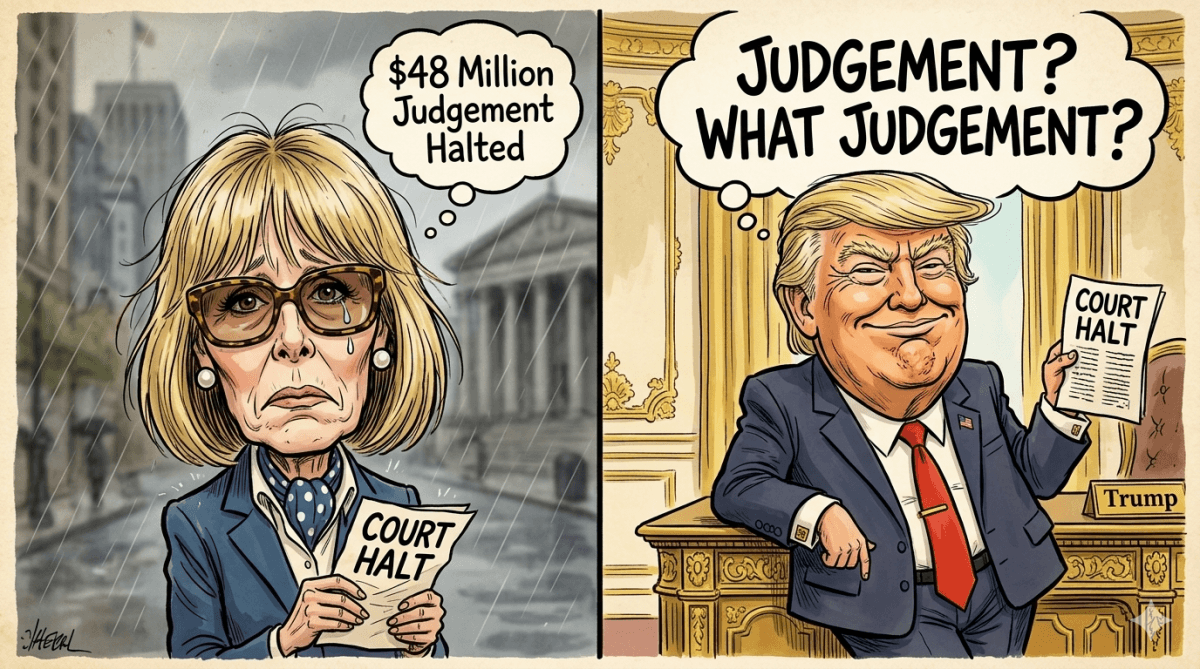
A federal appeals court temporarily halted the enforcement of an $83.3 million defamation judgment against President Donald Trump as he pursues review from the Supreme Court. This ruling marks a new procedural phase in the ongoing legal dispute with writer E. Jean Carroll.
Jump to The Flipside Perspectives

A federal appeals court has temporarily paused the enforcement of an $83.3 million defamation judgment against President Donald Trump, allowing him to seek review from the U.S. Supreme Court. The ruling, issued by a federal appeals court, marks a significant procedural development in the years-long legal battle initiated by writer E. Jean Carroll. While the underlying verdicts of liability remain intact, collection efforts for the substantial award are now on hold as the legal process continues.

The dispute originated from two civil trials brought by Ms. Carroll, who alleged that President Trump sexually assaulted her in the 1990s and then defamed her by denying her claims. In 2023, a Manhattan jury found President Trump liable for sexual abuse and defamation, awarding Ms. Carroll $5 million in damages. Subsequently, in January 2024, a second jury ordered President Trump to pay an additional $83.3 million for further defamatory statements he made denying Ms. Carroll's allegations. Both verdicts have since been upheld by federal appeals courts.

The recent appeals court decision does not overturn or vacate either of these verdicts. Instead, it specifically pauses the enforcement of the $83.3 million judgment while President Trump's legal team prepares to petition the Supreme Court for review. To ensure the availability of funds should the judgment ultimately be upheld, the appeals court mandated that President Trump increase the bond securing the judgment. This adjusted bond brings the total financial guarantee close to $100 million, a condition that Ms. Carroll's attorneys did not oppose, provided the increase was implemented.

Central to President Trump's legal strategy is the argument that statements he made while serving as president are protected under the doctrine of presidential immunity. His legal team contends that such statements cannot form the basis of civil liability. Additionally, President Trump's attorneys have challenged various evidentiary rulings made during both trials and are seeking Supreme Court review for both the $5 million and $83.3 million judgments.

However, federal appeals courts have consistently rejected these arguments. The 2nd U.S. Circuit Court of Appeals, which upheld both jury verdicts, previously declined to rehear the case en banc. This decision significantly narrows President Trump's remaining legal avenues, primarily leaving a request for review by the Supreme Court. The Supreme Court holds discretion over whether to accept a case for full review.

Should the Supreme Court decline to hear the appeal, the appellate rulings confirming the judgments will remain in effect, and the enforcement of the judgment could proceed under the bond conditions already imposed by the appeals court. Conversely, if the Supreme Court agrees to hear the appeal, the case would enter a full review process, which could extend for many months or potentially longer.

The Carroll litigation has attracted considerable national attention due to its dual nature: involving both jury findings of liability against a sitting president and complex constitutional questions concerning the scope of presidential immunity for statements made while in office. President Trump has consistently denied Ms. Carroll's allegations and continues to challenge both verdicts through the federal appellate system. For the immediate future, the case remains in a holding pattern, with the judgments standing but their enforcement temporarily halted as President Trump pursues further relief through the federal courts and potentially the nation's highest judicial body.

Advertisement

The Flipside: Different Perspectives

Progressive View

The E. Jean Carroll case underscores the importance of accountability and equal justice under the law, even for the most powerful individuals. The juries' findings of sexual abuse and defamation, upheld by appeals courts, demonstrate that no one is above the law. The temporary pause on the judgment's enforcement, while a procedural step, must not detract from the substance of the verdicts or delay justice for the plaintiff. Progressive viewpoints emphasize that claims of presidential immunity should not serve as a shield for private conduct or for defaming private citizens. Allowing such immunity would create a dangerous precedent, eroding public trust in the legal system and potentially enabling future abuses of power. The substantial judgment reflects the severity of the harm inflicted and the need for meaningful redress. While the appeals process is a right, it should not be used to indefinitely postpone accountability. The focus remains on ensuring that the legal system delivers justice and reinforces the principle that all individuals, regardless of their position, are subject to the same legal standards.

Conservative View

The temporary pause in the E. Jean Carroll judgment enforcement highlights critical concerns regarding presidential immunity and the potential for politically motivated litigation to impede a president's ability to govern. Conservatives often argue that a president must be shielded from civil lawsuits for official actions, including statements made while in office, to ensure they can perform their duties without undue harassment or distraction. The principle of presidential immunity is seen as vital for the separation of powers and the effective functioning of the executive branch. The substantial financial judgments in this case, regardless of their merits, raise questions about the weaponization of the legal system, particularly when targeting a political figure. Furthermore, the requirement for an escalating bond, now approaching $100 million, illustrates the considerable financial burden placed on individuals facing such legal challenges, potentially chilling free speech and legitimate defense. From a conservative perspective, the Supreme Court's potential review offers an opportunity to clarify the boundaries of presidential immunity, safeguarding the presidency from future such challenges and upholding a robust executive.

Common Ground

Across the political spectrum, there is shared agreement on the fundamental importance of a fair and impartial legal process. Both conservatives and progressives can agree that all parties, including a president, are entitled to due process and the opportunity to appeal adverse legal rulings through the established judicial system. The ongoing nature of the E. Jean Carroll case, now potentially reaching the Supreme Court, demonstrates the robust mechanisms of the U.S. legal framework designed to ensure thorough review. There is also a shared interest in defining the scope of presidential powers and immunities with clarity, as this affects the stability and functioning of the government, regardless of who occupies the Oval Office. Ensuring that legal proceedings are not unduly prolonged or weaponized, while also guaranteeing timely justice for plaintiffs, represents a common goal. The Supreme Court's potential involvement could provide much-needed clarity on these complex constitutional questions, benefiting future administrations and the public alike.

What's your view on this story? Share your thoughts and remember to consider multiple perspectives and being respectful when forming and voicing your opinion. "If you resort to personal attacks, you have already lost the debate..."

Advertisement

Contact Us About This Article

Have a question or comment about this article? We'd love to hear from you.

About Fair Side News

At Fair Side News, we believe in presenting news with perspectives from both sides of the political spectrum. Our goal is to help readers understand different viewpoints and find common ground on important issues.